The Comprehensive Guide to Solar Projects: Design, Engineering, Permitting, Storage & Installation
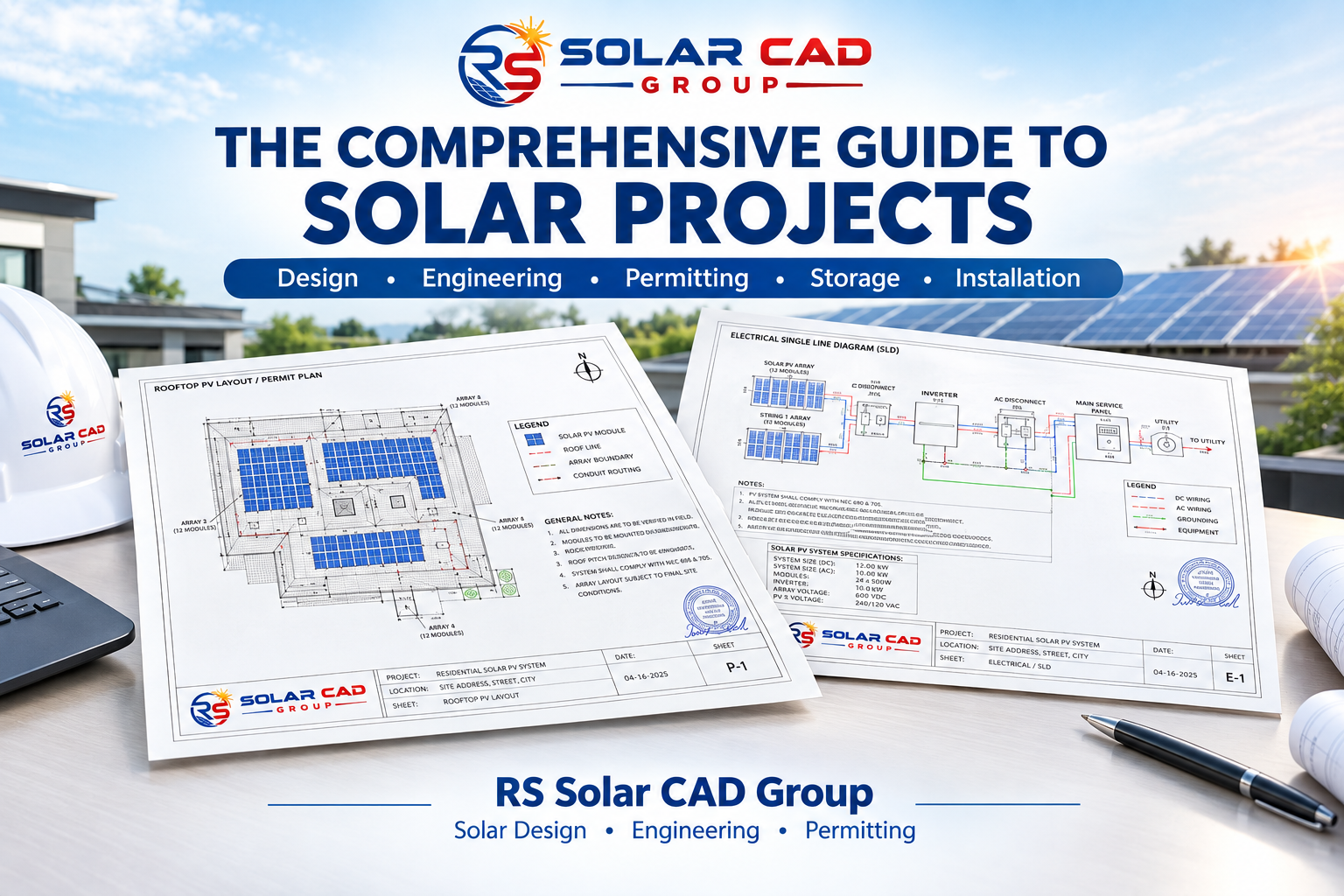
Solar projects involve much more than selecting panels and inverters. A successful solar project requires the right combination of system design, engineering, electrical planning, structural considerations, permitting, equipment selection, energy storage, and installation planning.
For solar installers, EPC companies, contractors, developers, and renewable energy businesses, understanding every stage of a solar project can help reduce design errors, avoid permitting delays, improve project execution, and deliver reliable solar systems.
This comprehensive guide covers the key areas involved in modern solar projects from the initial proposal and system design to engineering, permitting, equipment integration, and final installation.
Lorem ipsum dolor sit amet, consectetur adipiscing elit. Ut elit tellus, luctus nec ullamcorper mattis, pulvinar dapibus leo.
1. Understanding the Solar Project Lifecycle
Every solar project follows a series of important stages. While the exact workflow can vary depending on project size and location, a typical project moves through:
Project Assessment → Proposal Design → System Design → Engineering → Permitting → Equipment Selection → Installation → Inspection → Project Completion
Each stage affects the next one.
For example, an inaccurate initial design can create problems during engineering. Incorrect electrical information can result in permit comments. Structural issues can delay installation. Poor equipment coordination can affect system performance.
That is why an organized solar design and engineering workflow is essential.
2. Solar Proposal Design
The proposal stage is where the project begins to take shape.
A solar proposal generally helps determine:
- System size
- Estimated energy production
- Module quantity
- Inverter selection
- Roof or ground layout
- Estimated project cost
- Energy savings
- System configuration
A well-prepared proposal gives the installer and customer a clear understanding of the planned solar system before moving into detailed engineering.
Fast and accurate proposal design can also help solar companies respond to customers more quickly and improve project development efficiency.
3. Solar PV System Design
Once the project moves beyond the initial proposal, detailed PV system design becomes critical.
A professional solar PV design considers factors such as:
- Available roof or ground area
- Solar module placement
- Roof orientation and tilt
- Shading conditions
- Module quantity
- String configuration
- Inverter capacity
- System voltage
- Electrical equipment
- Equipment locations
- Access and maintenance requirements
The objective is to create a practical system that can be installed safely while meeting applicable design and electrical requirements.
4. Electrical Solar Design
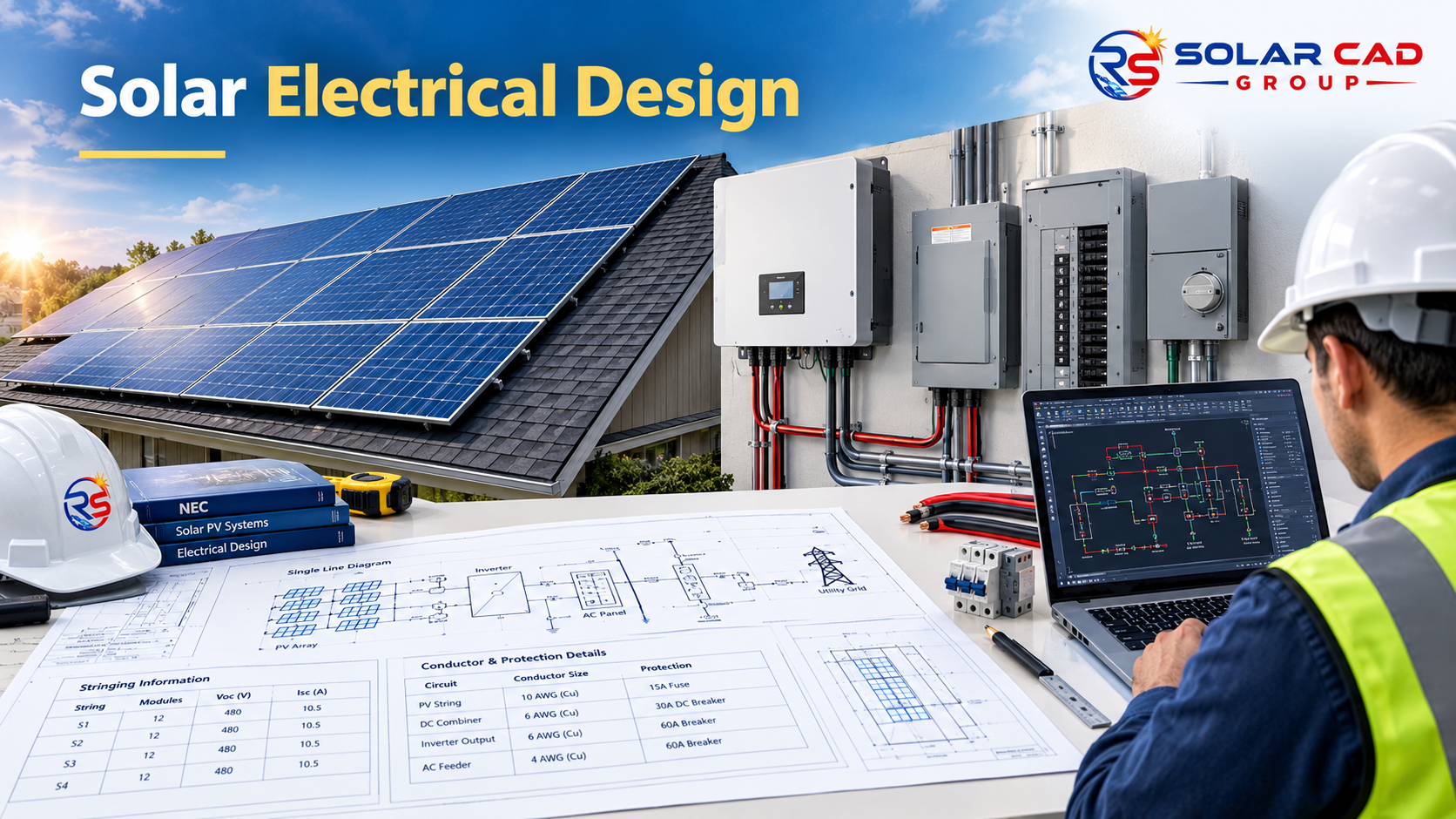
Electrical design is one of the most important components of a solar project.
A complete electrical design may include:
- Single-Line Diagrams (SLDs)
- Stringing
- Conductor sizing
- Overcurrent protection
- Disconnects
- Inverter connections
- Combiner equipment
- Electrical panel connections
- Grounding
- Equipment specifications
- Interconnection details
Accurate electrical documentation helps installers understand how the system components are connected and provides important information for permitting and installation.
5. Structural Solar Design
Solar installation is not only an electrical project. The supporting structure must also be evaluated.
Structural design may consider:
- Roof type
- Rafter or structural member information
- Attachment locations
- Mounting systems
- Wind loads
- Snow loads
- Equipment weight
- Roof loading
- Ground-mounted structures
For rooftop systems, the structural design must ensure that the proposed solar equipment and mounting system are appropriately considered for the existing structure.
A coordinated electrical and structural design can reduce issues during installation and review.
6. Solar Permit Plan Sets
Before a solar system can be installed, project documentation may need to be submitted for approval.
A solar permit plan set can include:
- Site plan
- Roof plan
- PV layout
- Electrical plan
- Single-Line Diagram
- Structural details
- Equipment specifications
- Mounting details
- Warning labels
- Notes and calculations
Permit requirements vary by project location and authority having jurisdiction (AHJ).
Therefore, solar designs should be prepared with the applicable local requirements in mind.
7. Avoiding Common Solar Permit Issues
Permit delays can increase project timelines and create additional work for solar companies.
Common design and documentation issues may include:
- Incorrect equipment information
- Missing electrical details
- Incomplete SLDs
- Incorrect system capacity
- Missing structural information
- Inconsistent module or inverter quantities
- Incorrect site information
- Missing labels or notes
- Incomplete calculations
- Design information that does not match the project
A detailed quality-control process before submission can help identify these issues earlier.
8. Solar Equipment Integration
Solar projects depend on multiple pieces of equipment working together correctly.
Depending on the system, equipment may include:
- Solar panels
- Inverters
- Batteries
- Mounting structures
- Disconnects
- Electrical panels
- Combiner boxes
- Energy meters
- Monitoring equipment
- EV charging equipment
Equipment selection should be coordinated with the system design.
The electrical characteristics, ratings, compatibility, installation requirements, and physical placement of equipment should all be considered during the design process.
9. Solar Energy Storage & Battery Systems
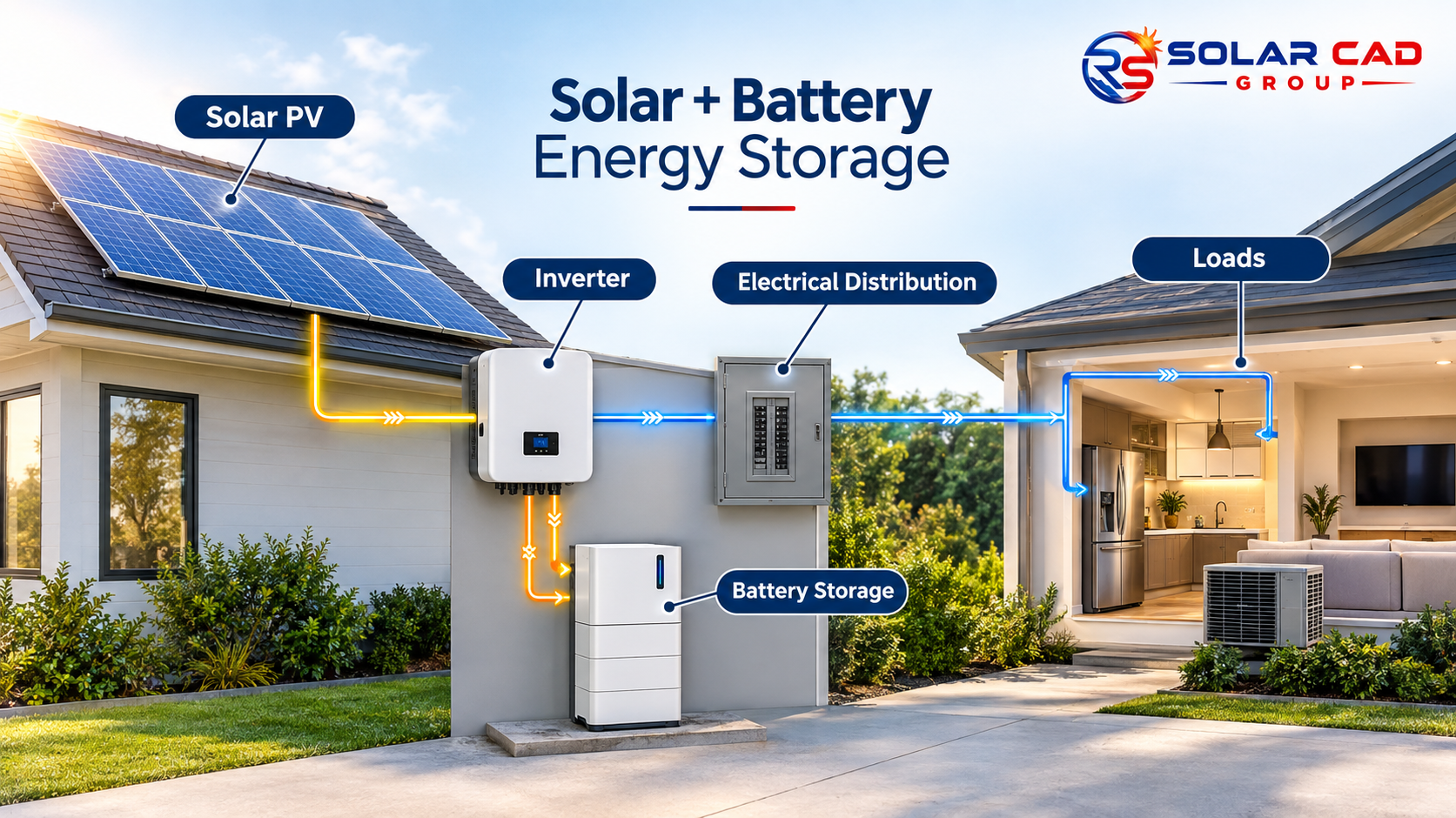
Energy storage is becoming an increasingly important part of solar system design.
Battery storage can be integrated with solar systems for applications such as:
- Energy backup
- Load management
- Energy shifting
- Increased solar utilization
- Grid-related applications
- Backup power
Battery-based systems require additional design considerations, including:
- Battery capacity
- Inverter compatibility
- Electrical connections
- Equipment location
- Disconnects
- Protection
- Backup-load configuration
- Battery system documentation
Storage should therefore be considered during the design stage rather than added as an afterthought.
10. Residential Solar Projects
Residential solar systems require careful planning because available roof space can be limited.
Residential design commonly involves:
- Roof measurements
- Roof plane identification
- Module layout
- Shading considerations
- Inverter placement
- Electrical connections
- Structural review
- Utility requirements
- Permit documentation
A good residential design should balance system capacity, available roof space, equipment placement, installation practicality, and project requirements.
11. Commercial Solar Projects
Commercial projects often involve greater system capacity and more complex electrical and structural requirements.
Commercial solar design may involve:
- Larger PV systems
- Multiple roof sections
- Ground-mounted systems
- Multiple inverters
- Complex electrical distribution
- Larger structural considerations
- Detailed engineering
- Utility coordination
- Commercial permitting
Because of the larger project scope, coordination between design, engineering, permitting, and installation teams becomes even more important.
12. Ground-Mounted Solar Systems
Ground-mounted solar projects require a different approach from rooftop systems.
Design considerations may include:
- Available land area
- Module orientation
- Row spacing
- Racking configuration
- Ground conditions
- Foundation requirements
- Access roads
- Equipment locations
- Electrical routing
- Site setbacks
A properly coordinated ground-mounted design can help improve constructability and simplify the installation process.
13. Solar Carport Design
Solar carports combine solar generation with parking infrastructure.
Design considerations may include:
- Parking layout
- Canopy structure
- Module arrangement
- Structural loads
- Electrical equipment
- Inverter location
- Drainage considerations
- Vehicle clearance
- EV charging integration
When EV charging is included, the electrical design must account for the additional charging loads and equipment.
14. Solar + EV Charging Design
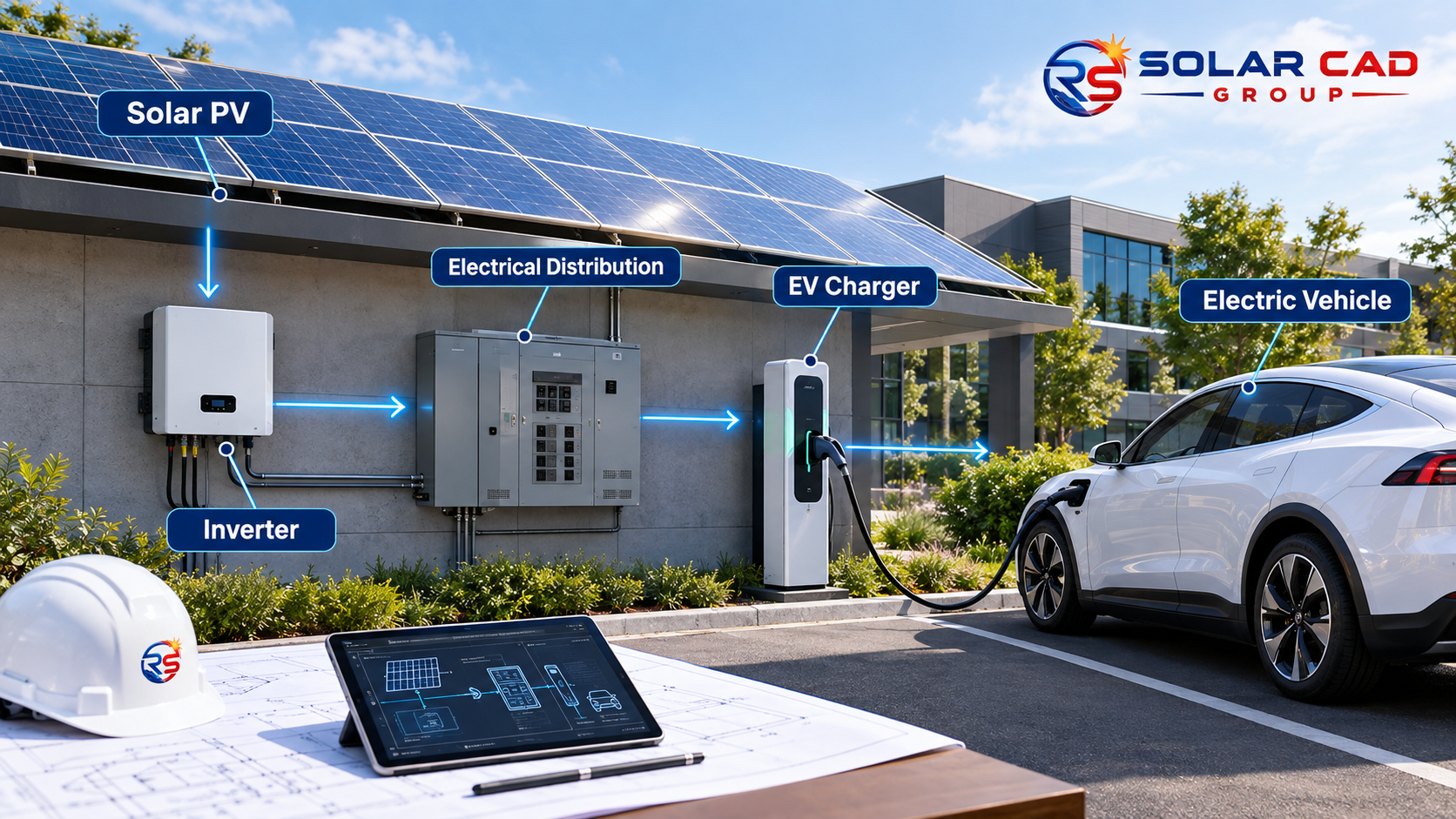
Solar and EV charging can be integrated into residential, commercial, and parking applications.
A coordinated design may include:
Solar PV → Inverter → Electrical Distribution → EV Charger
The design should consider:
- Charger capacity
- Electrical load
- Available service capacity
- Solar generation
- Equipment placement
- Conductor sizing
- Protection
- Load calculations
Proper planning helps ensure that the solar system and EV charging infrastructure work together as part of a coordinated electrical system.
15. Solar Design Quality Control
Quality control is an important part of every solar project.
Before a design is submitted or released for installation, important project information should be reviewed.
A quality-control checklist can include:
- Project address
- System capacity
- Module quantity
- Inverter quantity
- Equipment models
- Stringing
- Electrical ratings
- SLD
- Structural information
- Mounting details
- Labels
- Site layout
- Permit requirements
Consistency between drawings and project information can significantly reduce avoidable revisions.
16. From Solar Design to Installation
A solar design is only useful when it can be translated into a practical installation.
Installation teams need clear information about:
- Module locations
- Mounting points
- Equipment locations
- Electrical connections
- Conductor routing
- Inverter placement
- Disconnect locations
- Structural attachments
- Battery placement
- EV charger locations
Clear drawings and engineering documentation can help installers understand the project before work begins.
17. Why Accurate Solar Engineering Matters
Solar engineering connects the design concept with the physical installation.
Professional engineering can help solar companies address:
- Structural requirements
- Electrical requirements
- Equipment coordination
- Load calculations
- System safety
- Permit documentation
- Installation requirements
For larger and more complex solar projects, engineering becomes an essential part of project development.
Solar Project Success Starts With Better Design
A solar project involves much more than installing photovoltaic modules.
From proposal design and PV layouts to electrical engineering, structural design, permitting, battery storage, EV charging, and installation documentation, every stage contributes to the final project.
When these stages are properly coordinated, solar companies can improve workflow efficiency, reduce avoidable revisions, support smoother permitting, and provide installation teams with clearer project documentation.
How RS Solar CAD Group Supports Solar Projects
RS Solar CAD Group provides solar design, engineering, and permit support services for solar companies working on residential and commercial projects.
Our services include:
- Solar Proposal Design
- PV System Design
- Permit Plan Sets
- Electrical Design
- Single-Line Diagrams
- Structural Design
- Solar Engineering
- Battery & Energy Storage Design
- EV Charging Design
- As-Built Drawings
- Commercial Solar Design
- Residential Solar Design
- Permit & Engineering Support
From the initial proposal to engineering and permit-ready documentation, RS Solar CAD Group helps solar companies build a more organized and efficient project workflow.
Ready to streamline your solar project workflow?
Connect with RS Solar CAD Group for professional solar design, engineering, and permit support tailored to your project requirements.
Website: www.rssolarcadgroup.com Email: sales@rscadgroup.com
RS Solar CAD Group — Solar Design. Engineering. Permitting.