Smarter Solar Design in 2026: Where AI Helps and Where Engineers Still Lead
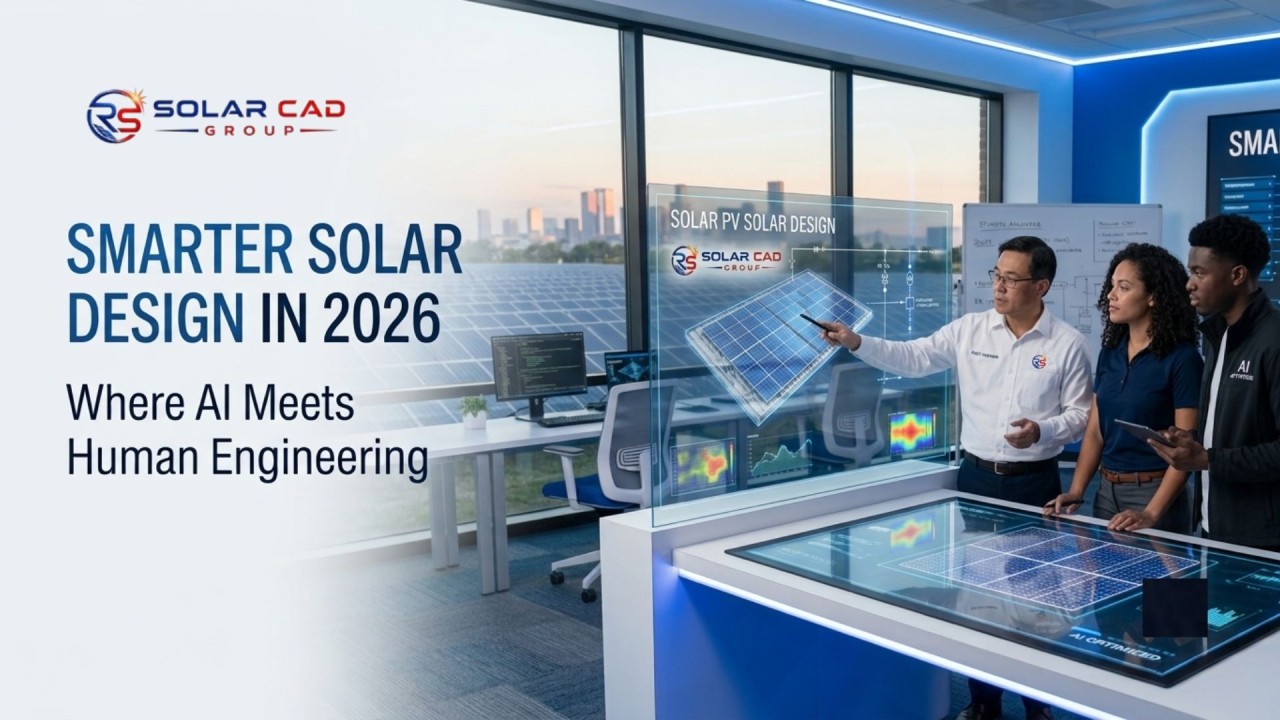
The solar industry is experiencing a major shift in how projects are planned, designed, engineered, and delivered. As solar adoption continues to expand across residential, commercial, and utility-scale markets, solar companies are under increasing pressure to complete projects faster, manage growing workloads, reduce operational costs, and maintain high engineering standards.
Artificial Intelligence (AI) is becoming an important part of this transformation.
From preliminary solar layouts and project data analysis to workflow automation and design documentation, AI-assisted technologies are creating new opportunities to improve the solar design process. Tasks that once required extensive manual effort can increasingly be supported by intelligent software, allowing solar professionals to manage information and complete certain design activities more efficiently.
But an important question remains: Can AI make solar design faster without compromising engineering quality?
The answer depends on how the technology is used.
Solar design is not simply about generating a layout or arranging photovoltaic (PV) modules on a roof. Every project involves technical requirements, site-specific conditions, equipment compatibility, electrical calculations, structural considerations, permitting standards, and coordination between multiple teams.
AI can help improve many parts of this process, but it does not eliminate the need for experienced solar designers and engineers.
For solar EPCs, installers, contractors, and engineering teams, the opportunity lies in combining the speed of intelligent technology with the technical judgment of experienced professionals.
In this article, we explore how AI is reshaping solar design workflows, where automation can create practical value, what its limitations mean for solar companies, and why the future of solar engineering is likely to depend on a combination of AI and human expertise.
1. How AI Is Transforming the Traditional Solar Design Process
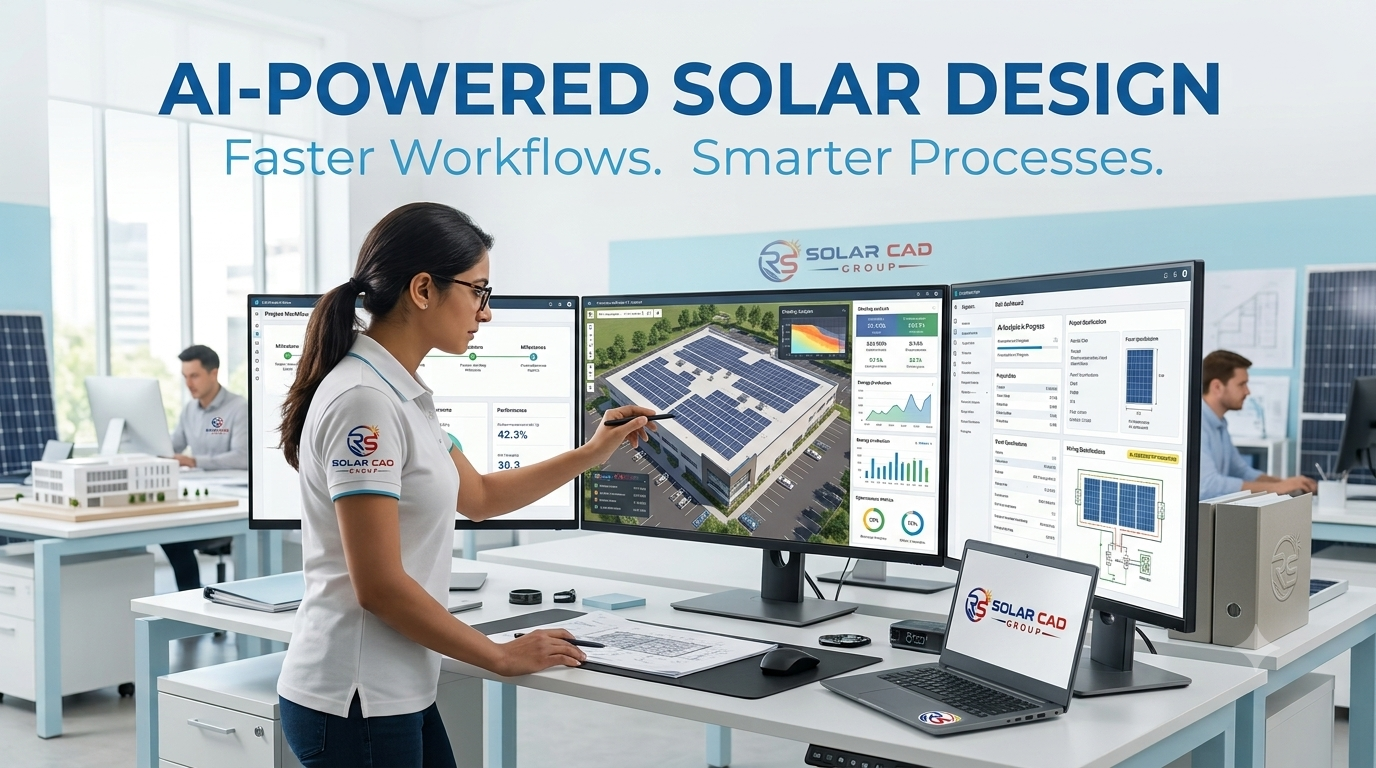
Traditional solar design involves several interconnected stages. Before a project is ready for installation, teams may need to collect site information, evaluate roof conditions, prepare preliminary proposals, develop PV layouts, select equipment, complete electrical calculations, prepare engineering documents, and coordinate permitting requirements.
Each stage requires accurate information and careful coordination.
For companies managing dozens or hundreds of projects, even small inefficiencies can create delays across the entire project pipeline.
AI-assisted tools can help reduce some of these inefficiencies by supporting repetitive tasks, processing project information, organizing design inputs, and improving communication between different workflow stages.
For example, certain software tools can assist with analyzing aerial imagery, identifying roof features, organizing project data, or generating preliminary design information.
However, the capabilities of these systems vary. Not every AI tool can independently perform detailed engineering calculations, interpret local permitting requirements, or produce complete construction-ready documents.
The practical value of AI is therefore not about automating every stage of solar design.
It is about identifying where technology can reduce repetitive effort and allow professionals to focus on tasks that require technical knowledge and engineering judgment.
2. AI-Assisted Solar Proposals: Improving the Early Project Stage
The proposal stage is often one of the first major steps in a solar project’s development.
Solar installers need to evaluate customer requirements, estimate system capacity, identify suitable equipment, and present a proposed solution that meets the customer’s energy goals.
For businesses handling a large volume of leads, preparing proposals quickly can become a significant operational challenge.
AI-assisted tools and solar design software can help streamline certain parts of this process.
Depending on the software and available project data, these tools may assist with:
- Preliminary roof and site analysis
- PV module arrangement
- Estimated system capacity
- Preliminary energy production estimates
- Equipment configuration
- Proposal documentation
- Customer-facing project visualization
These capabilities can help solar sales teams move from initial project information to a preliminary proposal more efficiently.
However, a preliminary proposal should not be treated as a final engineering design.Actual roof conditions, shading, equipment specifications, electrical constraints, and other site-specific factors must be evaluated before the project advances to detailed design.
For solar EPCs and installers, the goal is to use AI-assisted proposal workflows to improve responsiveness while maintaining a clear distinction between preliminary estimates and engineering-validated designs.
3. Reducing Repetitive Work Through Solar Design Automation
A considerable amount of solar design work involves repetitive activities.
Designers may need to transfer project information between systems, organize equipment specifications, update documentation, check project inputs, and prepare similar deliverables across multiple projects.
Although these activities are necessary, they can consume time that could otherwise be spent on technical review and project-specific design decisions. Automation and AI-assisted software can help reduce some of this workload.
For example, digital workflows may assist with organizing project data, identifying missing information, preparing documentation, and supporting repetitive design tasks.When implemented correctly, these capabilities can help improve consistency and reduce unnecessary manual effort.
However, automation is only as reliable as the information and rules supporting it. Incorrect equipment data, incomplete site information, or improperly configured workflows can lead to errors that may carry through multiple project stages.
This is why human review and quality-control procedures remain essential.
The real value of solar design automation is not simply completing tasks faster. It is helping experienced professionals spend more time on the work that requires their expertise.
4. Can AI Improve Solar Layout Design and Site Analysis?
Solar layout design is one of the most visually and technically demanding parts of a solar project.
Designers need to consider available roof space, module orientation, shading, setbacks, obstructions, access pathways, and other site-specific requirements.
For commercial projects, the process may become even more complex due to larger roof areas, multiple building sections, equipment locations, and structural limitations.
AI-assisted tools can support parts of site analysis and preliminary layout development.
Depending on the available imagery, software, and project inputs, these tools may help identify roof features, estimate usable areas, and support preliminary module placement.
This can provide designers with a useful starting point.
However, aerial imagery and automated analysis do not always capture every relevant site condition.
Roof modifications, hidden obstructions, structural limitations, inaccurate measurements, and outdated imagery can all affect the final design.
A layout that appears suitable in a digital model may still require adjustments after professional review.
For this reason, AI-assisted layout generation should be treated as a design-support capability rather than a substitute for technical verification.
Experienced solar designers remain responsible for evaluating whether the proposed layout is practical, accurate, and appropriate for the specific project.
5. AI and Solar Permitting: Faster Documentation, Greater Need for Accuracy
Permitting is one of the most important stages in the solar project lifecycle.
Before installation can proceed, solar projects generally need to satisfy applicable permitting and approval requirements.
These requirements can vary depending on the jurisdiction, project type, utility, building conditions, and authority having jurisdiction (AHJ).
A permit-ready solar plan set may require several technical documents, including:
- Site plans and roof layouts
- PV module placement
- Electrical single-line diagrams
- Equipment specifications
- Structural documentation
- Electrical calculations
- System labels and notes
- Applicable code references
- AHJ-specific documentation
AI and automation may help organize project information, support document preparation, and identify certain missing or inconsistent inputs. These capabilities can reduce administrative effort and help improve the flow of information through the permitting process.
However, permitting is not simply a documentation task. A technically incorrect plan set can lead to corrections, resubmissions, project delays, and additional coordination.
AI tools may not fully understand every local requirement or recognize every project-specific condition that affects approval.
Therefore, professional review remains necessary to verify that the documents are technically appropriate and aligned with applicable requirements.
For solar companies, the objective should be to combine the efficiency of digital tools with the accuracy and experience required for reliable permit-ready documentation.
6. Why Human Engineering Judgment Still Matters
AI can process large amounts of information, identify patterns, and assist with certain technical tasks. But solar engineering involves more than recognizing patterns. Every project has unique characteristics that can affect its design.
For example, two commercial buildings may have similar roof dimensions but very different structural conditions. Two residential projects may use the same inverter model but require different electrical configurations.
An engineer must evaluate the complete project context rather than relying only on standard patterns or automated recommendations.
Human engineering judgment is particularly important when dealing with:
Structural conditions: Existing roof structures, loading considerations, attachment methods, and project-specific structural requirements may require professional evaluation.
Electrical configurations: Equipment compatibility, voltage limits, overcurrent protection, conductor sizing, and applicable electrical requirements need appropriate technical review.
Site-specific challenges: Unusual roof geometry, obstructions, shading, access requirements, and incomplete project information may require design adjustments.
Code compliance: Applicable electrical, structural, building, and local permitting requirements must be properly interpreted and applied.
Engineering responsibility: Certain project documents may require review, approval, or a professional stamp from an appropriately licensed engineer, depending on the jurisdiction and project requirements.
AI can assist with analysis and documentation, but it should not be assumed to independently establish engineering compliance or replace required professional approval.
This is why human expertise remains a fundamental part of solar engineering.
7. The Economic Impact of AI-Assisted Solar Design
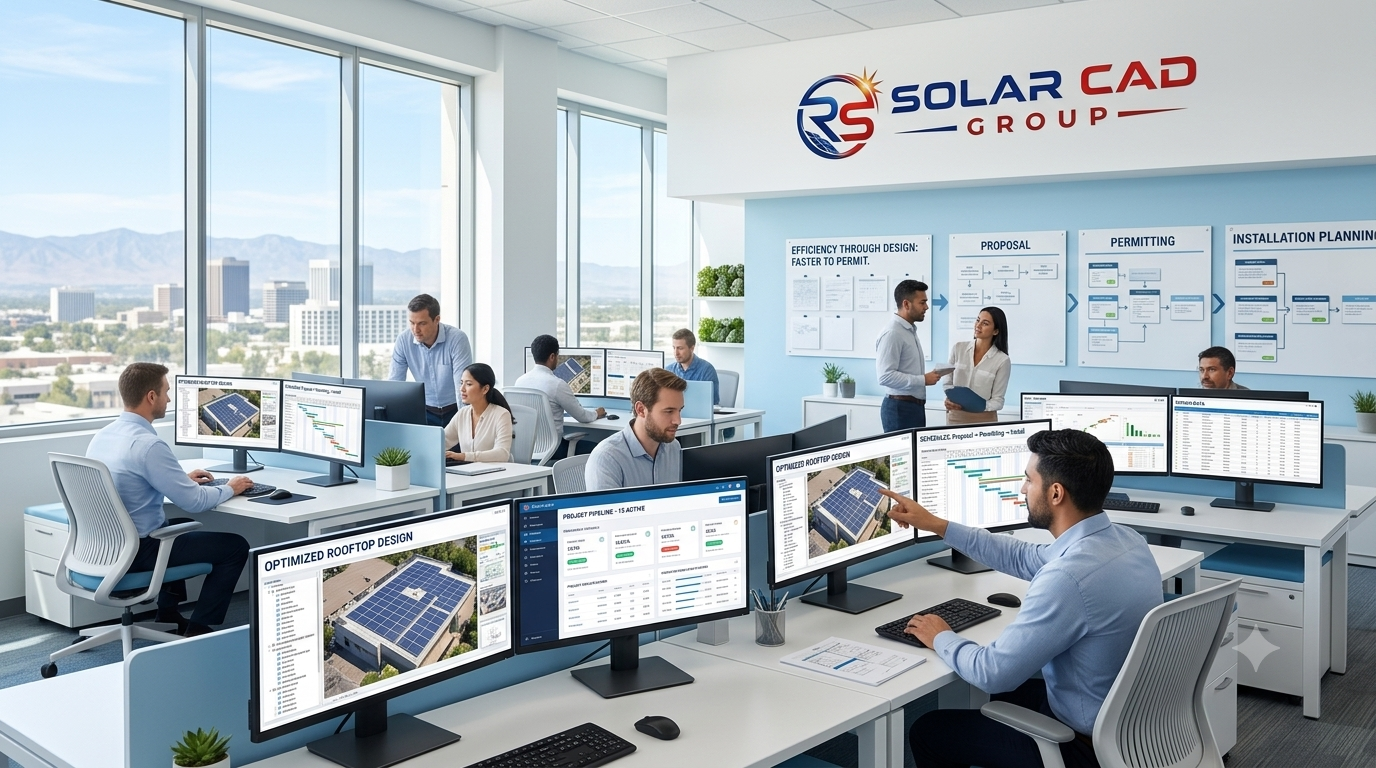
The economic impact of AI in solar design extends beyond the cost of individual design tasks. For solar EPCs and installers, design efficiency can influence the entire project pipeline.
When a company receives more projects than its internal design team can handle, the resulting backlog can affect proposals, permitting, installation schedules, and customer communication.
AI-assisted workflows may help reduce certain repetitive activities, improve information processing, and allow teams to use their available resources more efficiently.
Potential business benefits include:
Improved Project Throughput
Reducing repetitive work can help design teams process project information more efficiently and potentially manage higher volumes.
More Efficient Proposal Preparation
Faster access to preliminary design information can help sales teams respond to opportunities with less administrative delay.
Better Use of Engineering Resources
When automation handles suitable repetitive tasks, experienced engineers can devote more attention to complex technical reviews and project-specific decisions.
Reduced Rework Opportunities
Appropriately configured validation tools may help identify missing or inconsistent information before it moves into later stages of the workflow.
Greater Operational Flexibility
Digital workflows can help companies coordinate projects across internal teams and external design partners.
However, these benefits are not automatic.
AI implementation involves software costs, training, integration, data quality, workflow changes, and ongoing quality control.
The actual return on investment depends on the tools being used, the company’s project volume, and how effectively the technology is integrated into daily operations.
For many solar companies, the practical objective is not to eliminate design costs entirely.
It is to improve the relationship between project volume, design capacity, turnaround time, and engineering quality.
8. AI in Residential vs. Commercial Solar Design
AI-assisted design can support both residential and commercial solar projects, but the requirements and challenges can differ significantly.
Residential Solar Design
Residential projects often involve repetitive workflows and relatively standardized equipment configurations.
AI-assisted tools may support preliminary layouts, proposal preparation, project data organization, and certain documentation tasks.
However, residential projects still require attention to roof geometry, shading, electrical service conditions, equipment compatibility, and local permitting requirements.
Even a relatively small residential system can involve project-specific challenges that require experienced review.
Commercial Solar Design
Commercial solar projects can involve larger system capacities, more complex electrical configurations, varied building conditions, and additional structural or engineering considerations.
AI-assisted tools may help organize project information, support preliminary analysis, and reduce repetitive documentation tasks.
However, complex commercial projects often require more extensive coordination and technical evaluation.
The larger project scope does not eliminate the need for automation, but it does increase the importance of validating automated outputs.
In both residential and commercial solar design, AI should support the workflow without replacing the professional review needed to deliver reliable project documentation.
9. How AI Can Help Solar Companies Manage Revisions
Design revisions are a normal part of the solar project lifecycle.
A project may require updates because of equipment changes, customer requests, site conditions, utility feedback, AHJ comments, or corrections identified during technical review.
When revision requests are not managed efficiently, they can create additional workload and delay project progress.
AI-assisted document processing and workflow automation may help teams organize revision requests, compare project information, identify certain changes, and manage documentation more efficiently.
For example, automated systems may assist with identifying differences between document versions or flagging information that needs further review.
However, not every revision is simply a documentation update.
A change in module quantity, inverter selection, electrical configuration, or structural conditions may affect other parts of the design.
These changes need to be evaluated within the context of the complete project.
A well-managed revision process therefore requires both organized digital workflows and experienced professionals who can understand the technical impact of each change.
10. Building an AI-Ready Solar Design Workflow
For solar companies considering AI-assisted design, the first step should not necessarily be purchasing new software.
It should be understanding the existing workflow.
Before introducing automation, companies should identify where repetitive tasks occur, which activities create bottlenecks, and where errors or communication delays commonly arise.
A practical AI-ready solar design workflow may include the following stages:
Step 1: Project Information Collection
Collect the necessary site details, customer requirements, equipment specifications, and project documentation.
Step 2: Data Organization and Validation
Use appropriate digital tools to organize information and identify missing or inconsistent inputs.
Step 3: Preliminary Design and Proposal
Prepare preliminary layouts and proposal information using suitable solar design software and automation tools.
Step 4: Professional Design Review
Have experienced designers evaluate the preliminary work and identify project-specific technical considerations.
Step 5: Detailed Engineering and Documentation
Complete the required design calculations, electrical documentation, structural considerations, and applicable engineering deliverables.
Step 6: Quality Control
Review the final documents for accuracy, completeness, consistency, and applicable project requirements.
Step 7: Permitting and Project Coordination
Prepare the required submission package and coordinate any additional documentation or revisions.
This approach helps integrate technology into the workflow without removing the professional oversight needed at critical stages.
11. What Solar EPCs Should Consider Before Adopting AI
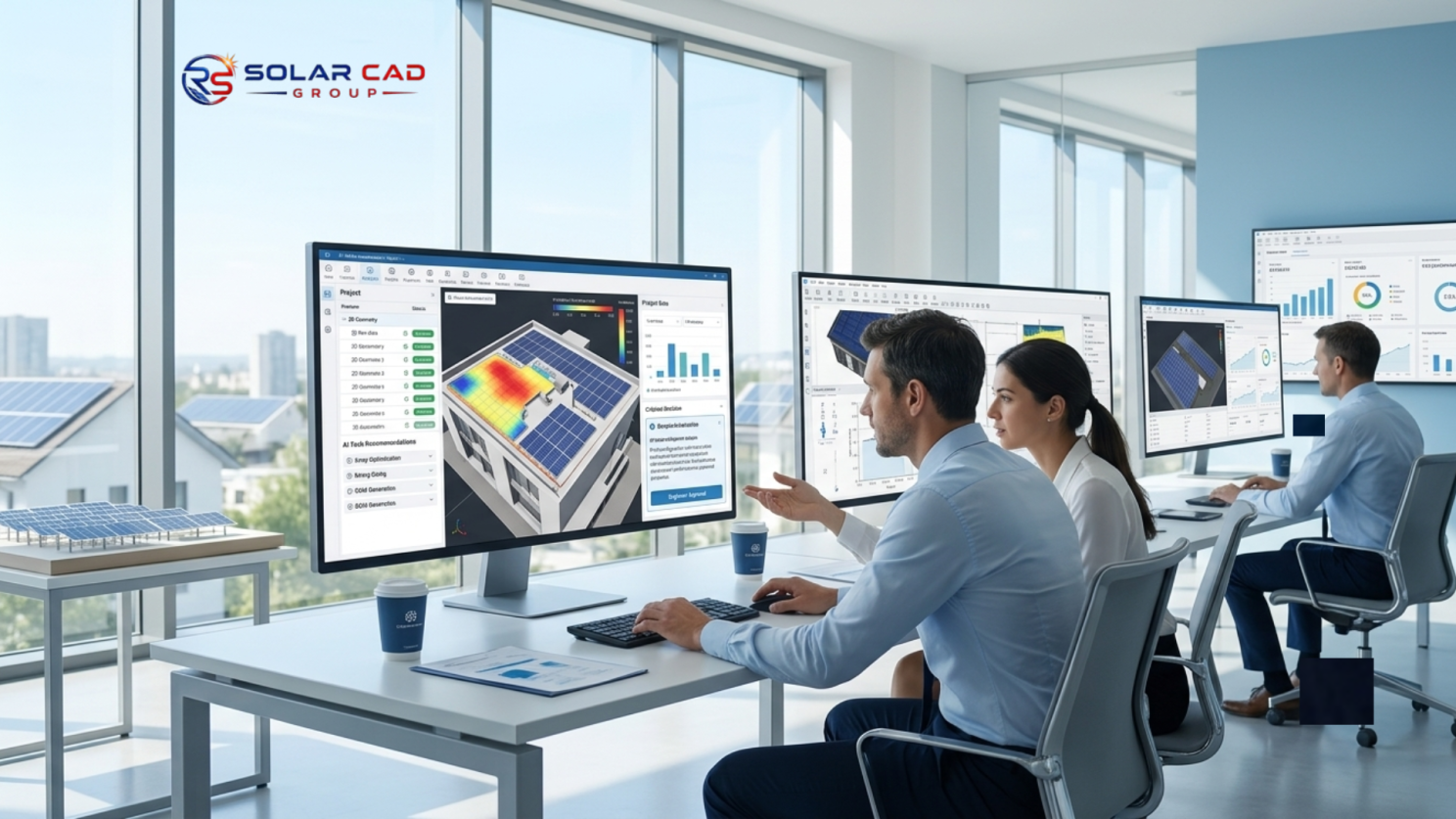
AI adoption should be based on practical business needs rather than technology trends alone. Solar EPCs and installers should evaluate several important factors before integrating AI into their design operations.
Identify the Right Use Cases
Not every design task benefits equally from automation. Companies should identify repetitive, data-intensive activities where technology can provide measurable improvements without introducing unnecessary risk.
Maintain Data Quality
AI-assisted tools depend on accurate project information.Incomplete or incorrect inputs can affect the reliability of the resulting outputs.
Establish Human Review Procedures
Critical design outputs should be reviewed by qualified professionals before being used for permitting, construction, or other important project decisions.
Evaluate Software Compatibility
New tools should work effectively with the company’s existing design software, documentation systems, and project management processes.
Measure Actual Performance
Companies should evaluate whether AI implementation improves turnaround time, reduces repetitive effort, supports quality control, or increases practical project capacity.
The goal is to adopt technology that solves real operational challenges rather than adding complexity to the design process.
12. The Future of Solar Design: AI and Engineers Working Together
The future of solar design is likely to involve a combination of intelligent software, automation, digital workflows, and experienced professionals.
AI capabilities will continue to develop, creating opportunities to improve data processing, preliminary analysis, documentation, and certain design activities.
At the same time, solar projects will continue to require professionals who can interpret project requirements, evaluate site-specific conditions, address engineering challenges, and verify technical outputs.
The most practical approach is not to treat AI and human engineers as competing alternatives.
It is to understand how each can contribute to a more efficient and reliable workflow.
AI can support speed and repetitive processing.
Automation can improve consistency.
Solar design software can support visualization and technical workflows.
Experienced engineers can provide judgment, verification, and project-specific expertise.
For solar companies, the objective is to bring these capabilities together in a way that improves project delivery without compromising engineering quality.
Conclusion: Smarter Solar Design Requires More Than Automation
AI is changing how solar projects are planned, designed, and managed.
From preliminary proposals and layout assistance to workflow automation, documentation, and revision management, intelligent technologies can help solar companies improve efficiency and manage growing project pipelines.
However, faster processing does not automatically mean better engineering.
Solar projects still require accurate site information, appropriate equipment selection, electrical and structural evaluation, code compliance, and professional review.
These responsibilities cannot simply be removed from the design process.
The future of solar design is therefore not about choosing between AI and human expertise.
It is about using AI to support experienced professionals, reduce repetitive work, improve project coordination, and create more efficient design workflows.
AI can help solar companies work faster, but experienced engineers help ensure that the work is technically sound, practical, and ready for the next stage of the project.
For solar EPCs, installers, and contractors, combining technology with engineering expertise can provide a practical foundation for managing increasing project demands while maintaining the quality and reliability their customers expect.
How RS Solar CAD Group Supports Modern Solar Projects

At RS Solar CAD Group, we understand that successful solar project delivery requires more than design software. It requires technical knowledge, organized workflows, engineering expertise, and dependable project support.
We support solar installers, EPCs, contractors, and other industry professionals across the USA and Canada with solar design and engineering services tailored to their project requirements.
Our services include:
- Solar Proposal Design
- PV System & Layout Design
- Permit-Ready Plan Sets & Revisions
- Structural & Electrical Engineering
- SLD & NEC-Based Design
- Utility Interconnection & HOA Documentation
Whether your team is managing a growing residential pipeline or complex commercial solar projects, our design support can help you manage project workloads and maintain a consistent engineering workflow.
Looking for reliable solar design and engineering support?
Connect with RS Solar CAD Group to discuss your upcoming projects and explore how our team can support your solar design workflow.
Website: rssolarcadgroup.com Email: sales@rscadgroup.com
Frequently Asked Questions (FAQs)
1. How is AI changing solar design in 2026?
AI is helping support preliminary solar layouts, proposal preparation, project data processing, documentation, and certain repetitive design tasks. Its practical impact depends on the software being used, available project data, and the level of professional review.
2. Can AI replace solar designers and engineers?
AI can assist with specific design activities, but experienced professionals remain essential for project-specific engineering decisions, technical verification, compliance, and quality control.
3. Can AI create permit-ready solar plan sets?
AI-assisted tools can support parts of the documentation process. However, permit-ready plan sets must be reviewed for accuracy and compliance with applicable AHJ, electrical, structural, and utility requirements.
4. How can AI help solar EPCs and installers?
AI-assisted workflows may help solar EPCs and installers improve proposal preparation, reduce repetitive work, organize project information, manage revisions, and support greater design capacity.
5. Is AI useful for both residential and commercial solar design?
Yes. AI can support certain activities in both residential and commercial solar design. However, commercial projects may involve more complex engineering and coordination requirements, making professional review particularly important.
6. What are the limitations of AI in solar engineering?
AI may struggle with incomplete project information, unusual site conditions, complex engineering decisions, and jurisdiction-specific requirements. Its outputs need appropriate validation before being used for critical design or permitting decisions.
7. What should solar companies consider before adopting AI design tools?
Solar companies should evaluate their existing workflows, data quality, software compatibility, project requirements, human review procedures, and the actual operational benefits the technology can provide.
8. What is the future of AI-assisted solar design?
The future is likely to involve a hybrid workflow in which AI and automation support repetitive and data-intensive activities while experienced designers and engineers lead technical review, project-specific decisions, and quality assurance.