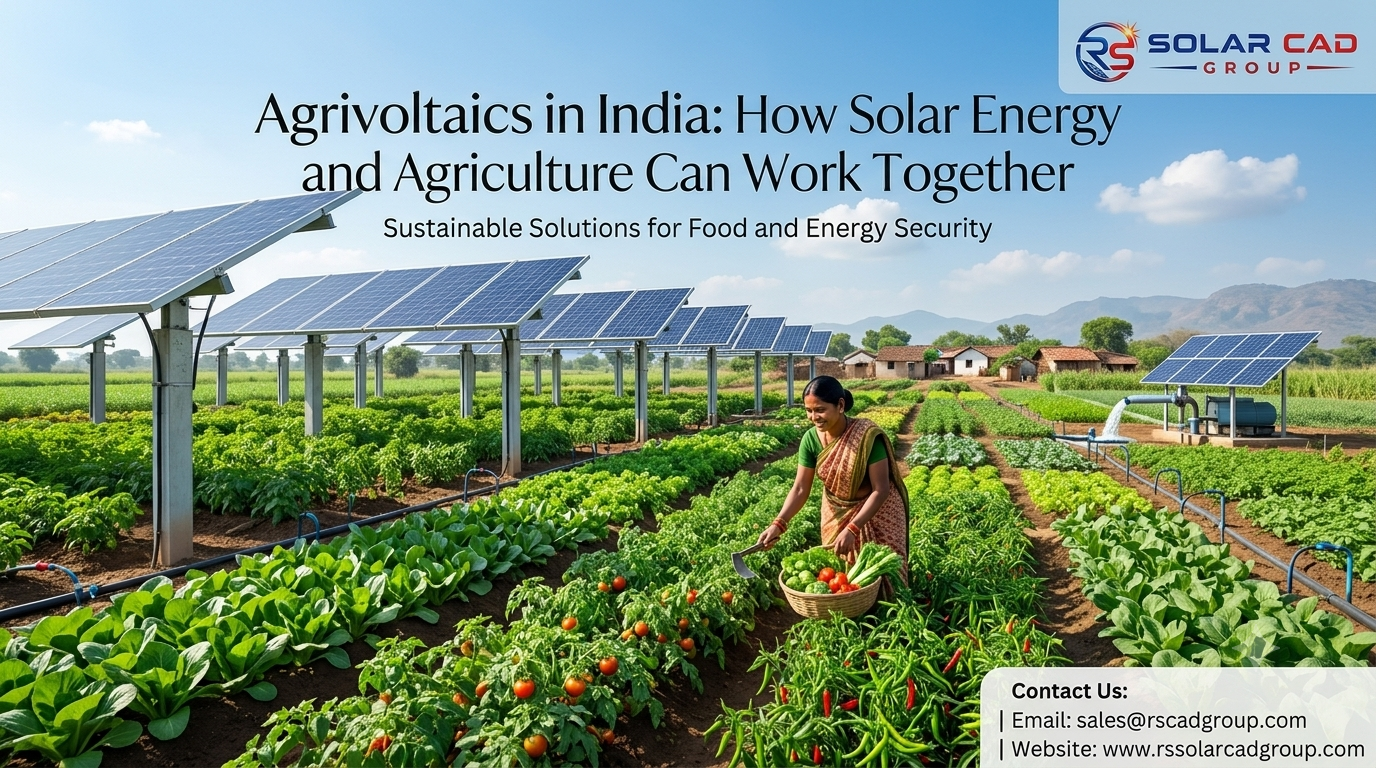
Agrivoltaics in India: How Solar Energy and Agriculture Can Work Together.
Introduction
India is at an important stage in its journey towards sustainable development. With a growing population, increasing electricity consumption and the need to strengthen agricultural productivity, the country faces the challenge of managing its natural resources more efficiently. Agriculture remains one of the most important sectors of the Indian economy, while renewable energy, particularly solar power, is becoming an essential part of the country’s energy transition.
However, both agriculture and solar energy development require significant land resources. Traditional ground-mounted solar power projects often use large areas of land exclusively for electricity generation. At the same time, agricultural land must continue supporting food production, rural livelihoods and local economies.
This creates an important question: Can the same piece of land be used for both farming and solar electricity generation?
Agrivoltaics offers a potential solution.
Also known as agri-photovoltaics or solar sharing, agrivoltaics combines agricultural activities with solar photovoltaic (PV) installations on the same land. Instead of completely replacing farming activities with solar infrastructure, this approach integrates solar panels into agricultural environments in a way that allows both activities to coexist.
For India, where agricultural conditions vary significantly across regions, agrivoltaics presents an opportunity to explore innovative land-use practices, improve renewable energy access and support more resilient farming systems.
As interest in sustainable agriculture and decentralised renewable energy continues to grow, understanding how agrivoltaic systems work, where they can be implemented and what challenges they present is becoming increasingly important.
1. Understanding the Concept of Agrivoltaics
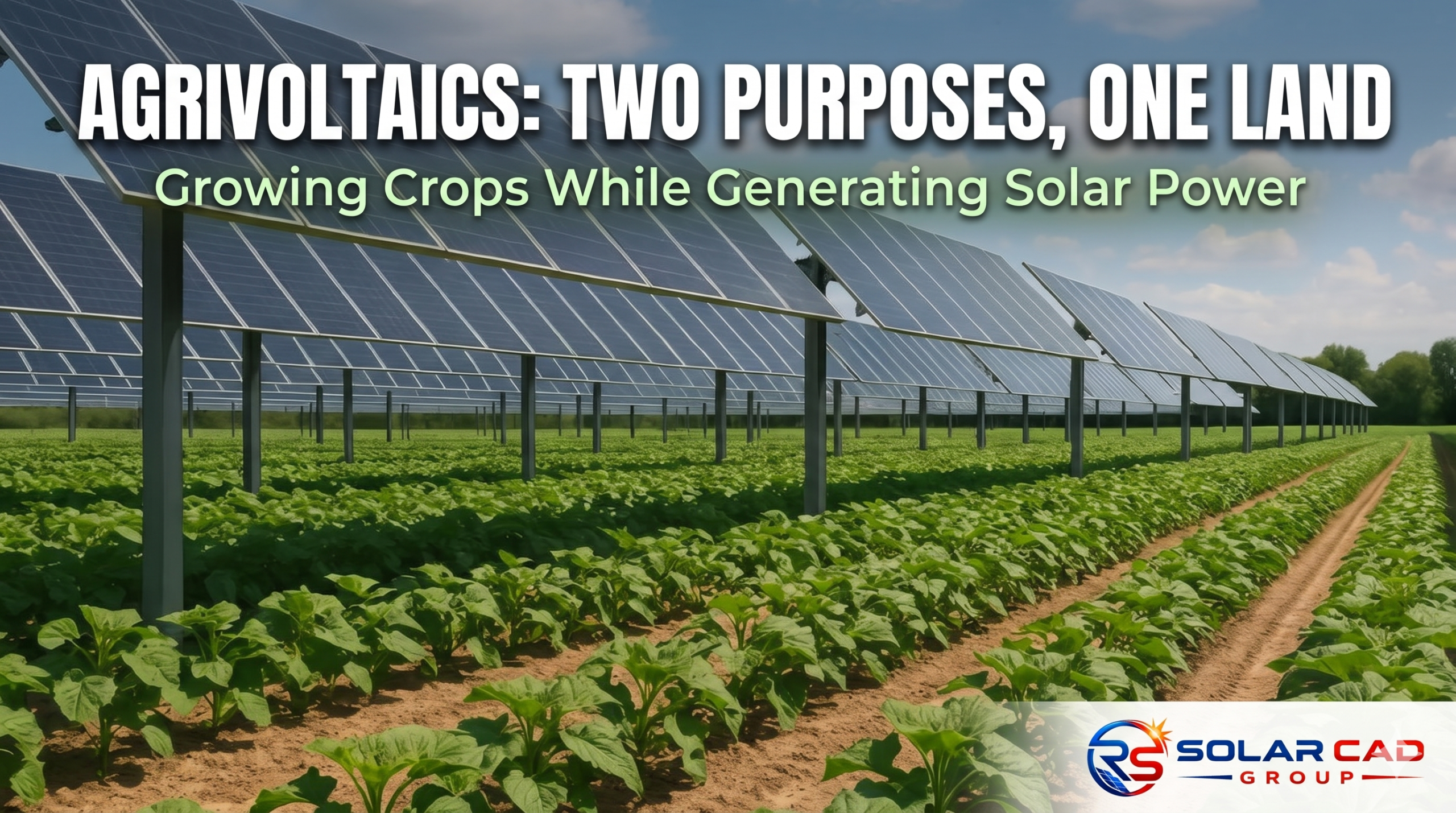
Agrivoltaics refers to the combined use of land for agricultural production and solar electricity generation. The concept involves installing photovoltaic panels above crops, between agricultural rows or as part of specially designed greenhouse structures.
Unlike conventional solar farms, where land is primarily dedicated to energy production, agrivoltaic systems are planned around the requirements of both farming and electricity generation.
The arrangement allows sunlight to be shared between solar panels and crops. Depending on the system configuration, some sunlight reaches the plants directly, while the remaining sunlight is converted into electricity.
The amount of shading, panel height, spacing and orientation are carefully considered because they directly influence crop growth and solar energy production.
Agrivoltaics does not mean that every agricultural field should be covered with solar panels. Instead, it involves selecting suitable crops, understanding local environmental conditions and developing a solar layout that supports agricultural activities.
The concept is particularly relevant in regions where farmers are interested in renewable energy but cannot afford to compromise their primary agricultural production.
2. Why Agrivoltaics Is Becoming Relevant in India
India’s agricultural sector faces several interconnected challenges, including changing weather conditions, increasing irrigation requirements, land-use pressure and the need to improve farm profitability.
At the same time, the country is expanding its solar energy capacity to reduce dependence on conventional energy sources.
Agrivoltaics connects these two priorities.
Growing Demand for Renewable Electricity
India’s electricity demand is increasing due to urbanisation, industrial development, infrastructure expansion and changing consumption patterns.
Solar energy has become an important part of the country’s renewable energy strategy because of India’s geographical location and considerable solar resource potential.
However, expanding solar capacity requires suitable project locations, infrastructure and careful land-use planning.
Agrivoltaics introduces an approach in which electricity generation can take place without necessarily eliminating agricultural activities from the same land.
Pressure on Agricultural Land
Land is an important resource for food production, rural employment and economic development.
Large solar installations can create land-use conflicts when agricultural or ecologically important areas are converted exclusively for energy generation.
By combining farming and solar infrastructure, agrivoltaics may help reduce competition between these two land requirements in suitable locations.
Changing Climatic Conditions
Indian agriculture is increasingly exposed to heatwaves, irregular rainfall and variations in seasonal temperatures.
Certain crops may experience heat stress, excessive evaporation and moisture-related challenges under such conditions.
Solar panels can provide partial shade, potentially modifying the microclimate around crops. This can be beneficial for selected crops, although results vary depending on local weather, crop characteristics and system design.
Need for Additional Rural Income Opportunities
Agricultural income can fluctuate because of weather conditions, market prices, input costs and production variations.
Agrivoltaics may provide another economic opportunity through solar electricity generation, electricity sales or land-use agreements with renewable energy developers.
The financial outcome depends on ownership arrangements, investment costs, electricity tariffs and the agricultural productivity of the project area.
3. Different Types of Agrivoltaic Systems
Agrivoltaic projects can be developed using different configurations depending on the available land, agricultural activities and energy generation objectives.
Selecting the right system is essential because each configuration creates a different relationship between sunlight availability, crop production and solar electricity generation.
3.1 Elevated Agrivoltaic Systems
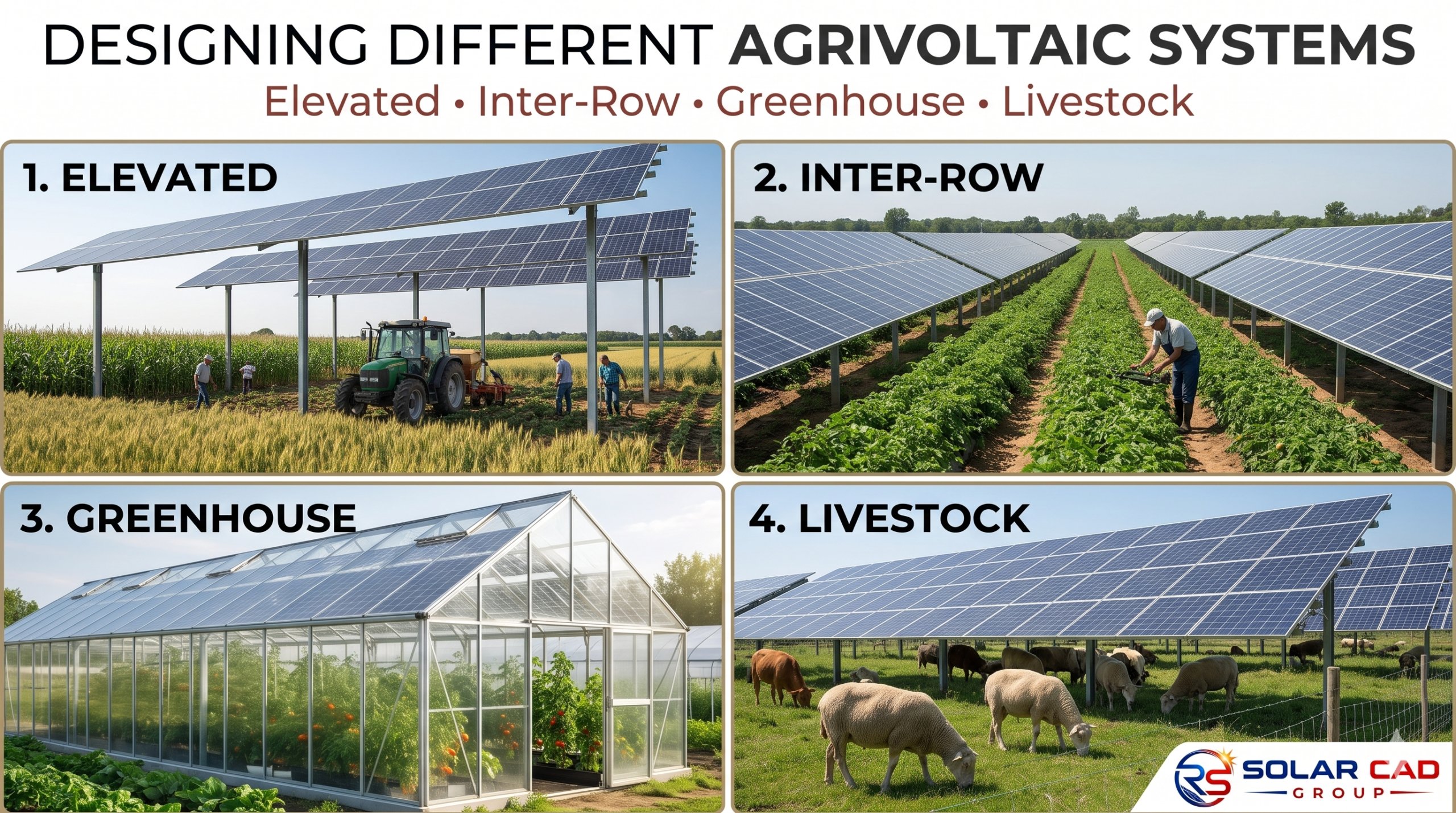
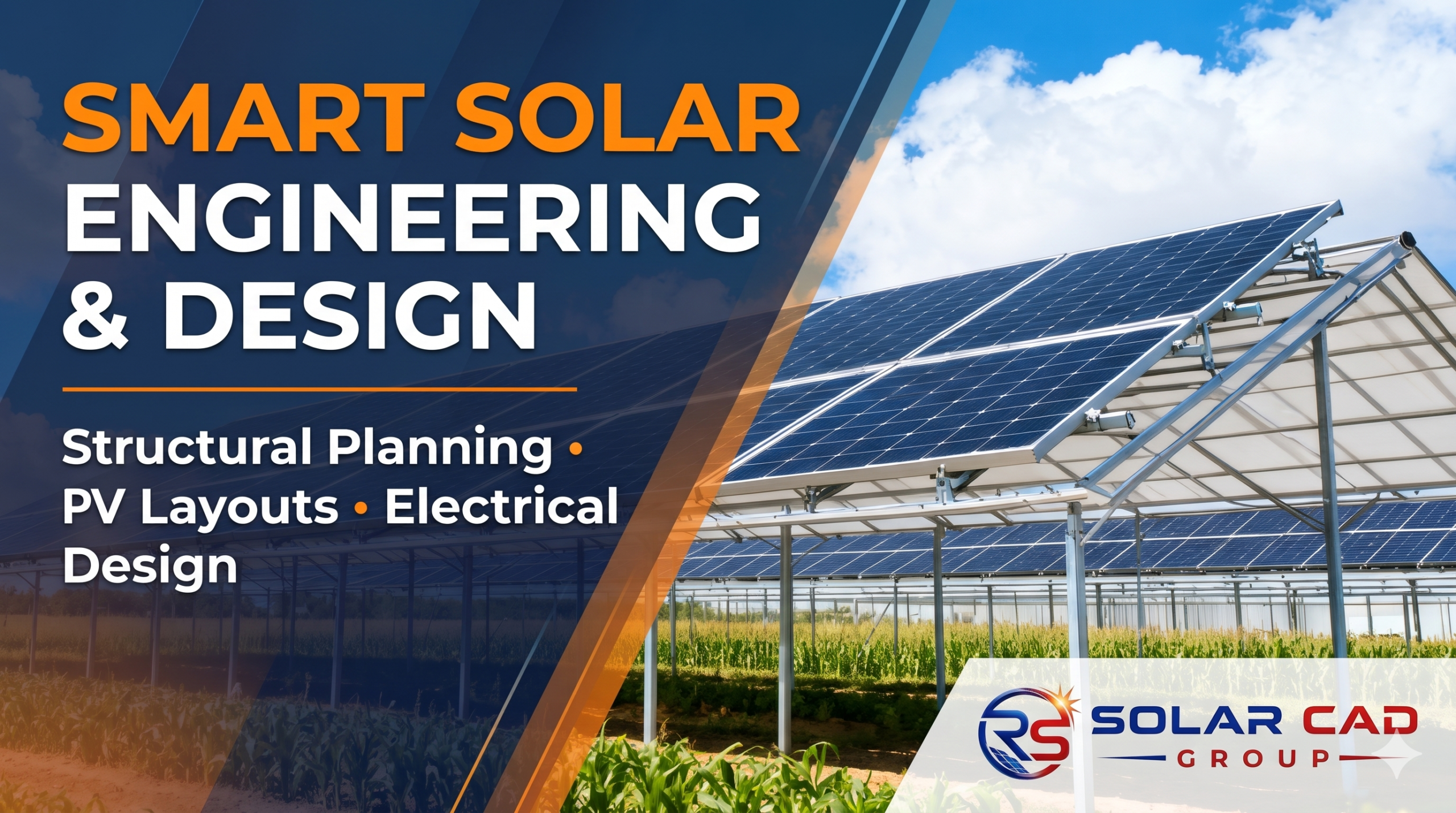
Elevated agrivoltaic systems involve installing solar panels on structures positioned above agricultural crops.
The additional height creates space underneath the panels for farming activities, including planting, harvesting and movement of agricultural equipment.
These systems are particularly relevant when farmers want to continue cultivating crops across most of the available land.
However, elevated installations require specialised structural planning. The height, foundation design, wind loading, panel spacing and equipment clearance must be evaluated carefully.
Although this configuration can support agricultural operations, it may also involve higher installation costs than conventional ground-mounted systems.
3.2 Inter-Row Solar Panel Systems
In inter-row configurations, solar panels are installed in separate rows with sufficient space between them for agricultural activities.
Farmers can use the available spaces for crop cultivation while the solar panels generate electricity.
The arrangement requires careful consideration of row-to-row spacing because excessive shading may affect crop growth.
The design must also maintain convenient access for irrigation systems, farm machinery and maintenance activities.
Inter-row systems can be considered where complete elevation of the solar structure is not practical.
3.3 Greenhouse-Integrated Agrivoltaics
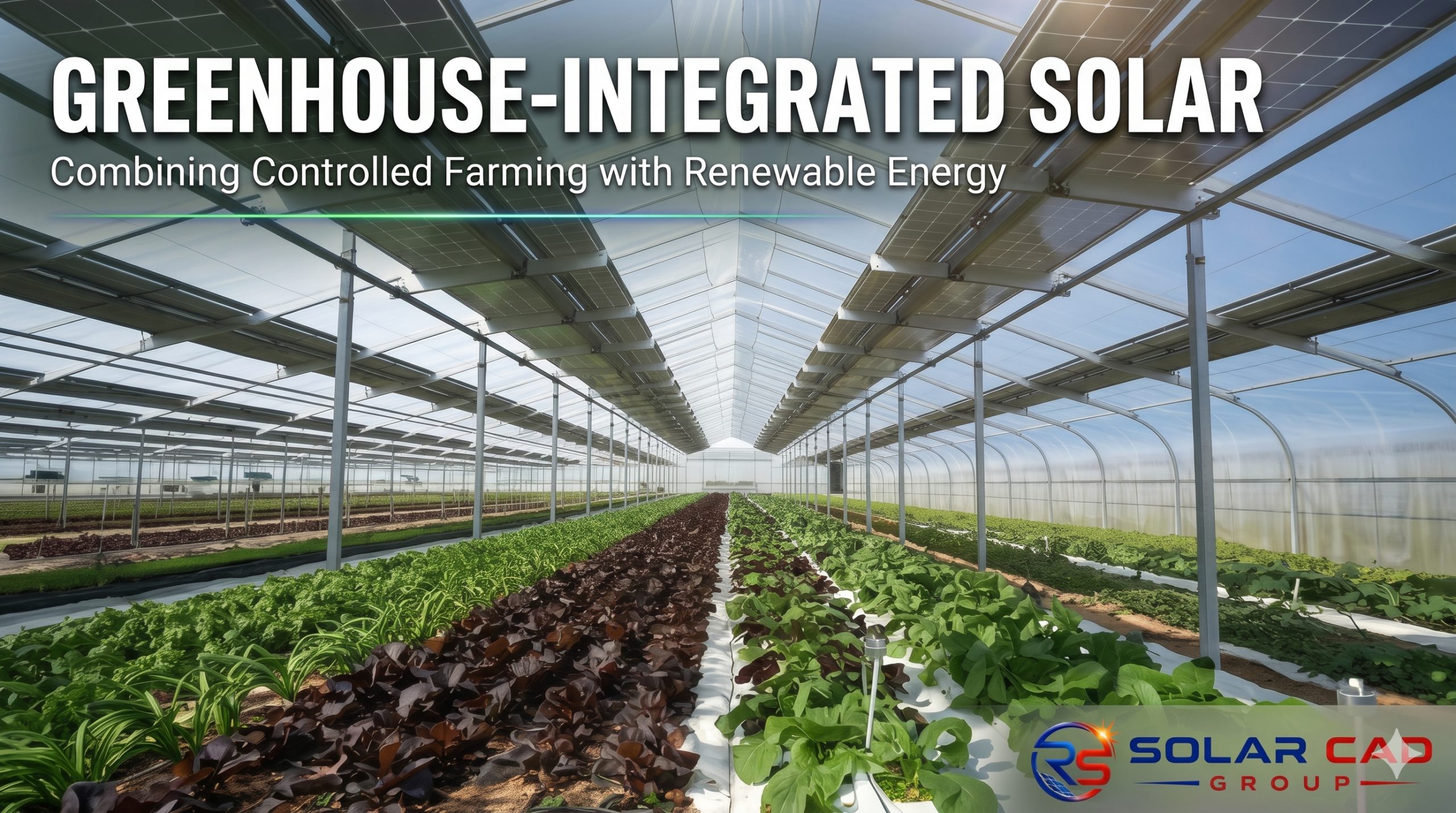
Greenhouse-based agrivoltaics combines controlled agricultural environments with solar electricity generation.
Solar panels may be installed on selected portions of greenhouse roofs, depending on the crop’s sunlight requirements.
The electricity generated can support greenhouse operations such as:
- Ventilation and cooling systems.
- Irrigation pumps.
- Temperature monitoring equipment.
- Lighting and automation.
- Refrigeration and post-harvest storage.
This approach may be useful for high-value horticulture and protected cultivation, particularly where electricity consumption is an important part of operational costs.
3.4 Livestock-Based Agrivoltaic Systems
Agrivoltaics can also be integrated with livestock activities in suitable agricultural locations.
Solar installations may provide shaded areas for grazing animals, while the surrounding land continues to support vegetation.
However, livestock movement, fencing, electrical safety, equipment protection and structural clearance must be considered.
The design should ensure that animals cannot damage electrical infrastructure or interfere with solar equipment.
4. How Agrivoltaics Can Support Different Crops in India
Crop selection is one of the most important factors in agrivoltaic project development.
Different crops have different sunlight requirements. Some need full sunlight throughout their growing cycle, while others can tolerate partial shading under suitable conditions.
Therefore, agrivoltaic planning must be based on crop-specific requirements rather than applying the same solar configuration to every agricultural field.
Vegetable Cultivation
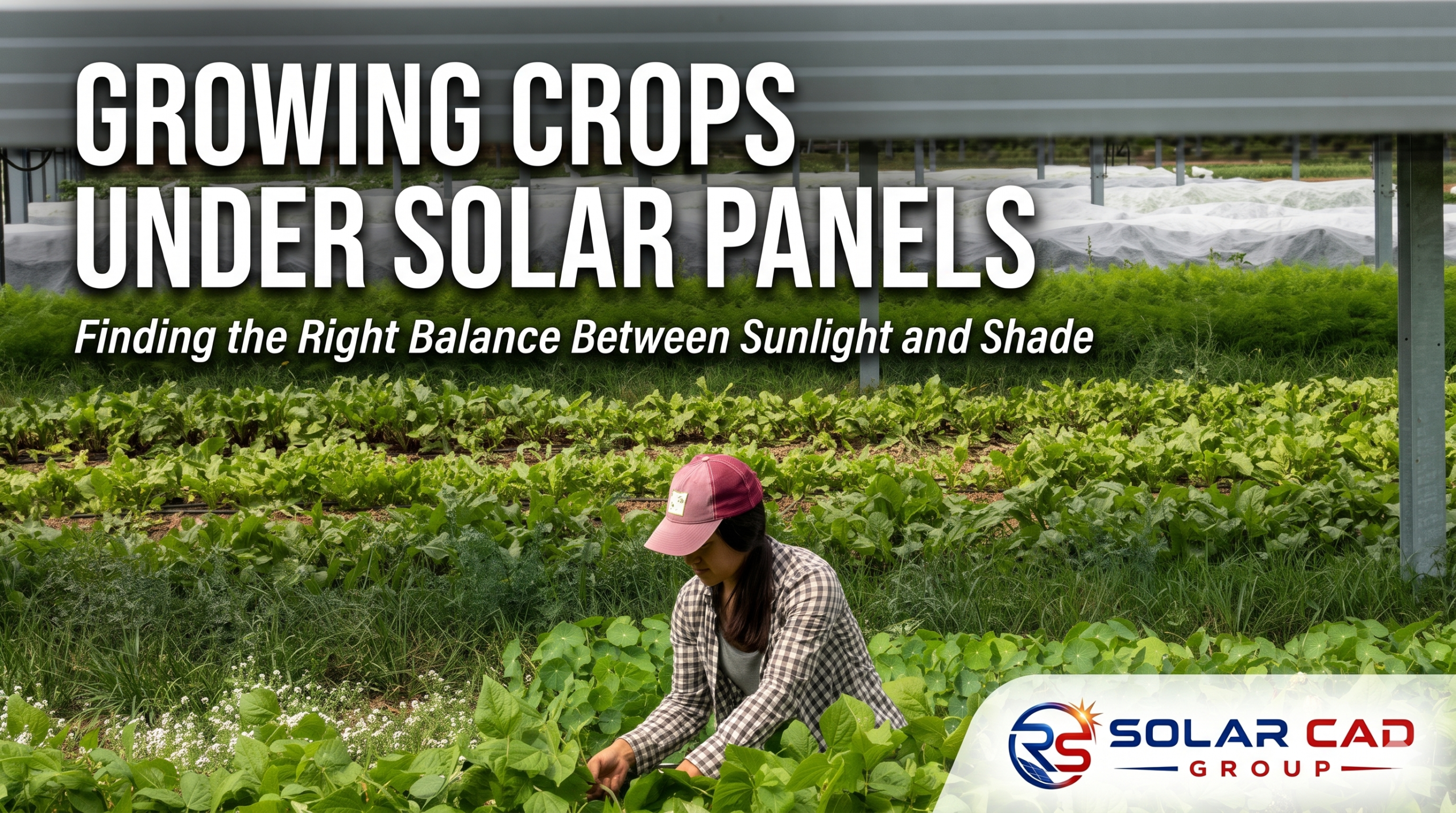
Certain leafy vegetables and selected horticultural crops may be suitable for cultivation under partial shading.
The modified microclimate may help reduce excessive heat exposure during particular growing periods.
However, insufficient sunlight can also reduce plant growth and agricultural output. The suitability of crops such as spinach, lettuce and other vegetables must be assessed according to local growing conditions.
Fruit and Horticultural Crops
Fruit cultivation and horticulture may offer opportunities for agrivoltaic applications in selected locations.
Partial shading could help manage excessive solar exposure for certain crops, depending on their developmental stage and environmental requirements.
Crop-specific trials are necessary to determine the appropriate panel arrangement and shading levels.
Medicinal and Commercial Crops
Some medicinal and commercially valuable crops may be able to grow under partial shade.
However, their response depends on the plant species, growing season, soil characteristics and available sunlight.
Farmers should consult agricultural experts before selecting crops for an agrivoltaic project.
Field Crops
The integration of solar infrastructure with conventional field crops requires additional evaluation.
Crops such as wheat, rice and maize have specific sunlight, water and machinery requirements.
Their suitability depends on panel height, spacing, shading patterns and the availability of agricultural equipment.
Agrivoltaic projects involving field crops should be supported by local research and demonstration studies before large-scale implementation.
5. Major Benefits of Agrivoltaics for Indian Agriculture
Agrivoltaics can offer several potential benefits when agricultural and energy requirements are balanced properly.
5.1 More Efficient Land Utilisation
One of the main advantages of agrivoltaics is the possibility of using the same land for two productive purposes.
Instead of dedicating an entire field exclusively to solar energy generation, agricultural activities can continue alongside electricity production.
This can be particularly relevant in areas where land availability is limited or competing land-use requirements create challenges.
The overall success depends on maintaining agricultural productivity while achieving economically viable electricity generation.
5.2 Additional Economic Opportunities for Farmers
Agrivoltaic systems can introduce an additional source of economic value for agricultural land.
Depending on the project structure, farmers may benefit from:
- Revenue from solar electricity generation.
- Land lease arrangements with solar developers.
- Reduced electricity expenses through on-site solar consumption.
- Electricity supply for agricultural infrastructure.
- Potential improvements in farm operating efficiency.
However, these benefits are not guaranteed. Farmers should carefully examine project investment, maintenance costs, electricity arrangements, ownership responsibilities and contractual conditions.
5.3 Potential Reduction in Heat Stress
Excessive heat can negatively affect crop development, especially during sensitive growing stages.
Solar panels may reduce the amount of direct sunlight reaching crops and create partially shaded growing environments.
For certain crops and climatic conditions, this may reduce heat stress and improve growing conditions.
However, excessive shading can limit photosynthesis and negatively affect agricultural productivity. The objective should be to provide an appropriate balance rather than maximum shading.
5.4 Better Soil Moisture Management
Solar panels can influence the microclimate beneath and around the installation.
Shaded areas may experience lower direct solar exposure, which can potentially reduce soil evaporation.
Panel arrangements can also influence how rainfall reaches the ground. Depending on the design, runoff may become concentrated in particular locations.
Therefore, appropriate drainage, soil protection and water distribution planning are essential.
When combined with suitable irrigation methods, agrivoltaics may contribute to more efficient water management.
5.5 Renewable Energy for Agricultural Activities
Electricity plays an important role in modern agriculture.
Solar energy generated through agrivoltaic installations may support different farm operations, including:
- Irrigation and water pumping.
- Agricultural machinery and processing equipment.
- Greenhouse operations.
- Cold storage facilities.
- Crop drying and post-harvest management.
- Farm monitoring and automation systems.
Access to locally generated renewable electricity can help support agricultural infrastructure and reduce dependence on conventional electricity sources.
5.6 Supporting Sustainable Rural Development
Agrivoltaics connects renewable energy development with agricultural activities.
It may create opportunities for collaboration between farmers, solar developers, agricultural institutions and technical service providers.
This approach can support rural infrastructure development while encouraging the adoption of renewable energy technologies.
6. Technical Considerations in Agrivoltaic Solar System Design
Designing an agrivoltaic system involves more than selecting solar modules and determining the available installation area.
The system must be developed around two separate but interconnected objectives: electricity generation and agricultural productivity.
A successful project requires careful coordination between solar engineering, structural design and agricultural planning.
6.1 Solar Panel Height and Ground Clearance
Panel height determines how easily agricultural activities can continue underneath the installation.
The required clearance depends on crop height, farm machinery, harvesting methods and the movement of workers.
For example, a system designed for small vegetable cultivation may require different structural dimensions compared with one intended for mechanised farming.
The design should provide sufficient working space without unnecessarily increasing structural costs.
6.2 Panel Orientation and Row Spacing
Panel orientation and row spacing influence electricity generation and sunlight distribution across agricultural land.
Conventional solar projects often prioritise maximum energy generation from the available area.
Agrivoltaic systems require an additional consideration: how much sunlight should reach the crops.
The spacing between panel rows should be evaluated through shading analysis, solar generation estimates and crop requirements.
6.3 Shading Analysis
Shading analysis is particularly important in agrivoltaic projects.
The movement of the sun throughout the day and across different seasons changes the shadow patterns created by solar panels.
Poorly planned layouts may create excessive shading over agricultural areas.
Designers should evaluate seasonal solar angles, panel tilt, row spacing and the intended crop’s sunlight requirements.
Where appropriate, simulation tools can help estimate the expected shading conditions before construction.
6.4 Structural Engineering Requirements
Elevated solar structures must be designed to withstand site-specific environmental conditions.
Important engineering considerations include:
- Wind loads and structural stability.
- Foundation design and soil bearing capacity.
- Mounting structure material selection.
- Dead loads and applicable additional loads.
- Corrosion protection.
- Long-term structural durability.
- Access for inspection and maintenance.
In India, local wind conditions, soil characteristics and applicable engineering standards should be considered during the structural design process.
6.5 Electrical Design and Safety
Electrical infrastructure must be integrated carefully without obstructing farming operations.
Cable routing, inverter positioning, electrical protection and equipment accessibility should be planned according to the project layout.
Important considerations include proper earthing, protection against electrical faults, cable management, equipment enclosures and safe maintenance access.
Agricultural irrigation systems and water-related activities also require additional electrical safety precautions.
6.6 Irrigation and Drainage Planning
Agricultural water systems should be coordinated with the solar installation.
The location of irrigation pipelines, drip systems, pumps and drainage channels must be considered before construction.
Solar panel runoff should also be managed carefully to avoid soil erosion, waterlogging or uneven water distribution.
A coordinated layout can reduce operational conflicts between solar infrastructure and agricultural activities.
7. Agrivoltaics and India’s Different Climatic Regions
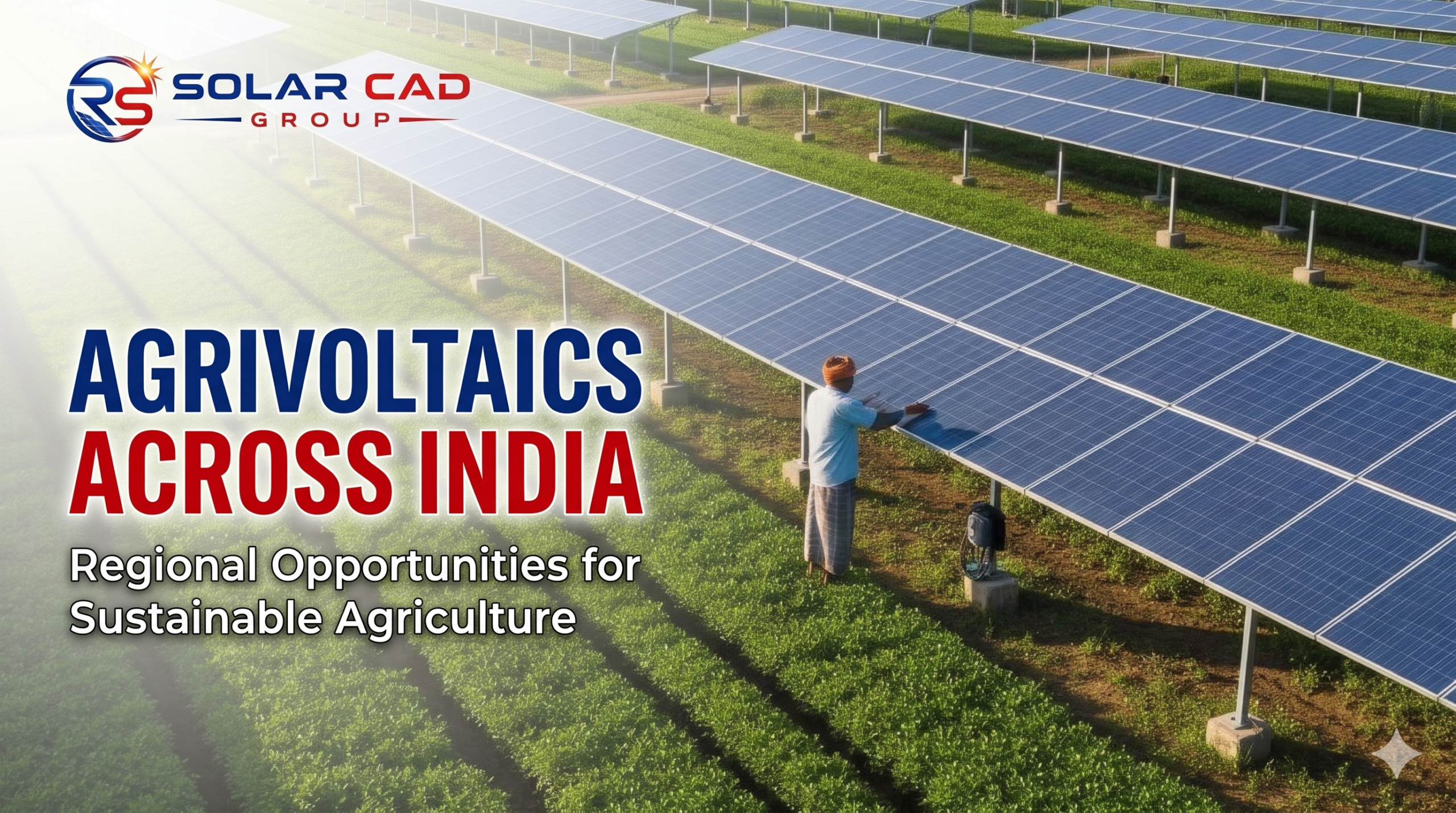
India has diverse climatic conditions, soil types and agricultural practices. Consequently, a single agrivoltaic design cannot be applied successfully across the entire country.
Regional planning is essential.
Northern India
States such as Punjab, Haryana, Uttar Pradesh and Rajasthan have different agricultural and climatic conditions.
In areas experiencing high summer temperatures, selected crops may benefit from partial shade under carefully designed systems.
However, winter sunlight requirements and seasonal crop cycles must also be considered.
Western India
States such as Gujarat and Maharashtra have significant solar energy potential and diverse agricultural activities.
Agrivoltaic systems may be explored for selected horticultural crops, vegetable cultivation and other suitable agricultural applications.
Water availability and irrigation efficiency are particularly important considerations in many locations.
Southern India
States such as Karnataka, Tamil Nadu, Andhra Pradesh and Telangana offer opportunities to explore agrivoltaic applications across different agricultural environments.
Horticulture, vegetable cultivation and selected commercial crops may be considered depending on local conditions.
The design should account for seasonal rainfall, temperature variations and agricultural practices.
Eastern and Northeastern India
Regions in eastern and northeastern India have different rainfall patterns, crop cycles and land characteristics.
Agrivoltaic applications may require specialised approaches that consider high rainfall, drainage requirements, local crop varieties and terrain conditions.
Local agricultural research is essential before selecting suitable project locations.
8. Challenges That Need to Be Addressed
Although agrivoltaics has considerable potential, its implementation in India involves several technical, economic and operational challenges.
High Initial Investment
Elevated structures and specialised mounting systems can increase project costs.
The additional investment may include stronger foundations, customised structural components, engineering studies and specialised installation work.
A proper financial assessment is required to compare the long-term benefits with the initial expenditure.
Balancing Crop Production and Electricity Generation
The most important challenge is achieving a suitable balance between crop productivity and solar power generation.
Increasing panel coverage may improve electricity generation but can also reduce the sunlight available for crops.
On the other hand, providing more open space for agricultural activities may limit the available solar installation area.
Project designers must identify an appropriate configuration based on both objectives.
Limited Awareness Among Farmers
Agrivoltaics is still an emerging concept for many agricultural communities.
Farmers may have questions about crop performance, solar equipment maintenance, ownership rights and financial returns.
Training programmes, pilot installations and demonstration projects can help improve awareness.
Maintenance and Agricultural Operations
Solar installations require regular inspection, cleaning and electrical maintenance.
At the same time, agricultural activities involve irrigation, harvesting, machinery movement and seasonal field preparation.
Maintenance schedules and access routes should be planned so that solar operations do not unnecessarily interrupt farming activities.
Land Ownership and Regulatory Considerations
Agricultural land-use rules, land ownership arrangements and project approvals may vary across Indian states.
Farmers and developers should evaluate applicable local regulations before beginning project development.
Clear agreements are also important when solar developers and landowners collaborate on a shared agricultural and energy project.
9. Government Initiatives Supporting Solar Energy in Agriculture
Government initiatives play an important role in encouraging renewable energy adoption across India’s agricultural sector.
One of the major programmes is the Pradhan Mantri Kisan Urja Suraksha evam Utthaan Mahabhiyan (PM-KUSUM).
The scheme focuses on supporting farmers through decentralised renewable energy generation and solar-powered agricultural infrastructure.
Its major components include:
- Component A: Installation of decentralised grid-connected renewable power plants, including solar power plants, by farmers, groups and other eligible entities.
- Component B: Installation of standalone solar agricultural pumps.
- Component C: Solarisation of existing grid-connected agricultural pumps, including individual pump solarisation and feeder-level solarisation.
PM-KUSUM is not specifically an agrivoltaics programme. However, its focus on agricultural solarisation creates opportunities to explore complementary models that combine agricultural activities with renewable electricity generation.
Other renewable energy policies, state-level solar programmes and agricultural development initiatives may also influence the future adoption of agrivoltaic systems.
Farmers and project developers should always verify current scheme guidelines, eligibility conditions and applicable incentives through official government sources before making investment decisions.
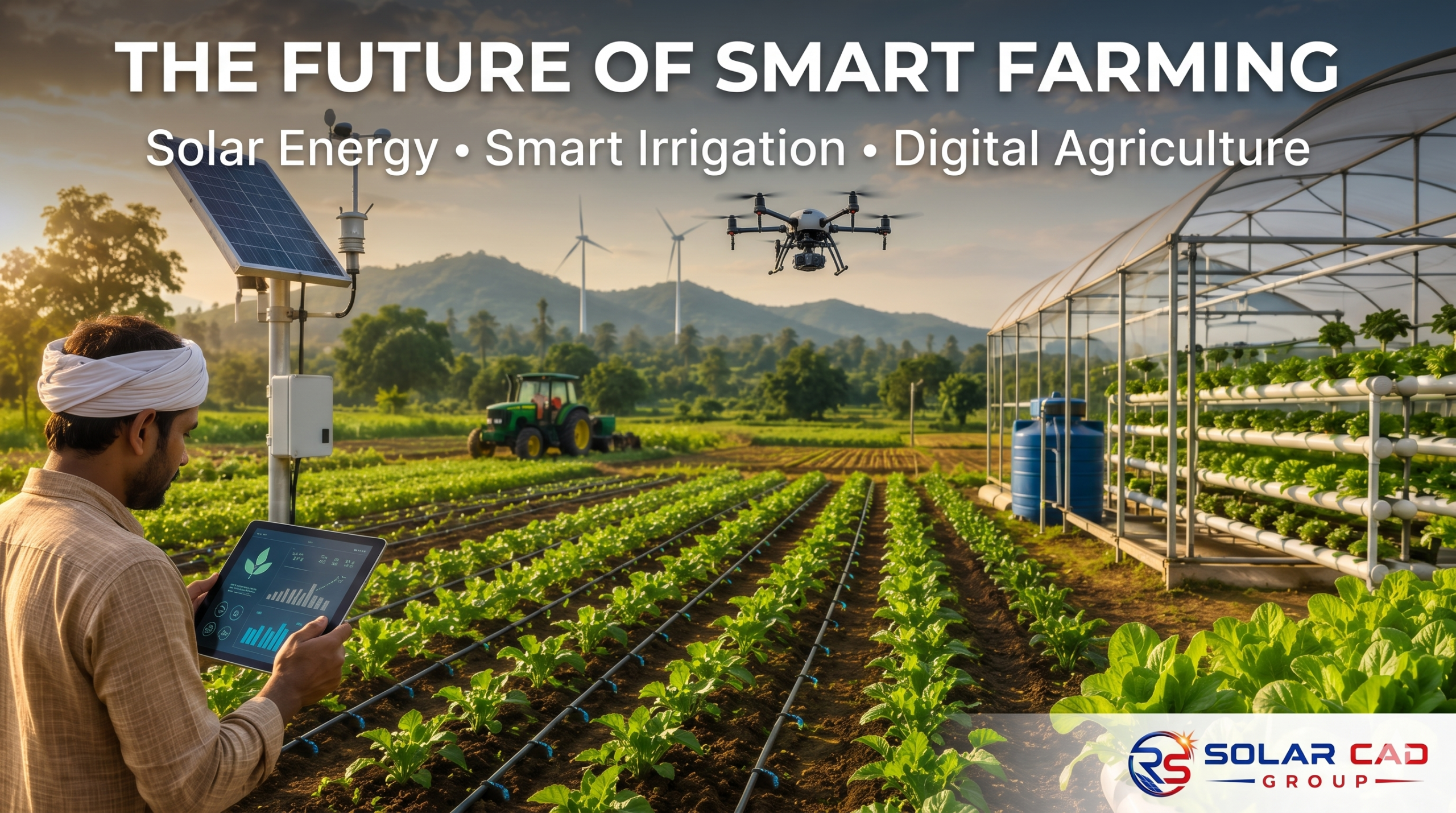
10. Agrivoltaics and the Future of Smart Farming in India
The future of agriculture will increasingly involve the integration of technology, resource management and sustainable energy solutions.
Agrivoltaics can become part of this transformation when combined with modern agricultural practices.
Integration with Smart Irrigation
Solar-powered irrigation systems can support agricultural water management.
When combined with soil moisture sensors and automated irrigation controls, agrivoltaic installations may help farmers manage water usage more efficiently.
Integration with Agricultural Monitoring
Digital monitoring technologies can help track soil moisture, temperature, humidity and crop conditions.
These measurements can provide useful information about how solar panel shading influences the agricultural environment.
Over time, collected data can help farmers and researchers identify suitable crops and improve system configurations.
Combining Agrivoltaics with Energy Storage
Battery energy storage systems may help manage the difference between solar electricity generation and farm electricity consumption.
Stored energy can potentially support agricultural operations during periods when solar generation is unavailable.
However, the economic viability of battery storage depends on system costs, usage patterns and electricity requirements.
Supporting Agricultural Infrastructure
Agrivoltaic installations may also be integrated with other agricultural facilities such as cold storage, food processing units and protected cultivation structures.
This creates opportunities to connect electricity generation with different stages of agricultural production.
11. What Should Be Considered Before Starting an Agrivoltaic Project?
Before implementing an agrivoltaic project, farmers, developers and investors should evaluate the agricultural and technical requirements together.
The following factors can help determine whether a project is suitable.
- Site Assessment: Examine land size, soil conditions, terrain, drainage, solar exposure and available infrastructure.
- Crop Selection: Identify crops that can grow under the expected sunlight and shading conditions.
- Solar Resource Evaluation: Analyse solar irradiation, panel orientation, tilt angle and expected electricity generation.
- Structural Feasibility: Evaluate mounting height, foundation requirements, wind loads and equipment clearance.
- Water Management: Review irrigation systems, drainage arrangements and rainfall patterns.
- Financial Assessment: Compare installation costs, expected electricity generation, agricultural revenue and long-term maintenance expenses.
- Regulatory Review: Verify land-use requirements, project approvals, grid connectivity and applicable government policies.
- Long-Term Monitoring: Monitor agricultural output, electricity generation, soil conditions and maintenance requirements to evaluate project performance.
A pilot project can be a practical starting point before expanding an agrivoltaic installation across a larger agricultural area.
12. The Role of Solar Engineering and Design in Agrivoltaic Development
Agrivoltaic projects require a coordinated approach to engineering and planning because solar infrastructure must function alongside agricultural activities.
A poorly planned installation may create difficulties for farming operations, restrict machinery movement or produce excessive shading.
Therefore, the solar layout should be developed by considering both energy and agricultural requirements from the beginning.
Technical planning may include site layouts, photovoltaic module positioning, structural arrangements, electrical drawings, cable routing and project documentation.
The design team must also coordinate with agricultural specialists and other project stakeholders to ensure that the proposed installation is suitable for the intended farming activities.
At RS Solar CAD Group, we understand the importance of accurate solar project planning and technical documentation. As solar technologies continue to evolve, innovative approaches such as agrivoltaics highlight the need for thoughtful system layouts that consider site conditions, structural requirements and practical project objectives.
Conclusion
Agrivoltaics represents an innovative opportunity to bring India’s agricultural and renewable energy sectors closer together.
By combining crop cultivation with solar electricity generation, this approach can help improve land-use efficiency while creating opportunities for additional farm income, renewable electricity access and more adaptable agricultural environments.
However, agrivoltaics is not a universal solution for every crop or location. Its success depends on careful crop selection, appropriate panel spacing, structural engineering, water management and financial feasibility.
India’s diverse agricultural landscape makes region-specific planning especially important. Research, pilot projects, farmer participation and collaboration between agricultural and solar industry experts will play an important role in determining how effectively this technology can be adopted.
As the country continues to expand its renewable energy infrastructure, agrivoltaics could become an important approach to supporting both agricultural productivity and clean energy generation.
The opportunity lies not in replacing farmland with solar installations, but in developing systems where agriculture and solar energy can work together productively.