How PM-KUSUM Solar Pumps Can Reduce Irrigation Costs by Up to 80%
Introduction
Agriculture is the backbone of India’s economy, and irrigation plays a crucial role in ensuring healthy crop growth and higher yields. However, rising diesel prices, increasing electricity tariffs, and unreliable power supply continue to increase irrigation expenses for farmers across the country.
For many farmers, irrigation costs represent a significant portion of annual farming expenses, directly impacting profitability. To address this challenge, the Government of India launched the PM-KUSUM (Pradhan Mantri Kisan Urja Suraksha evam Utthaan Mahabhiyan) Scheme, a revolutionary initiative that promotes solar-powered irrigation systems through financial assistance and subsidies.
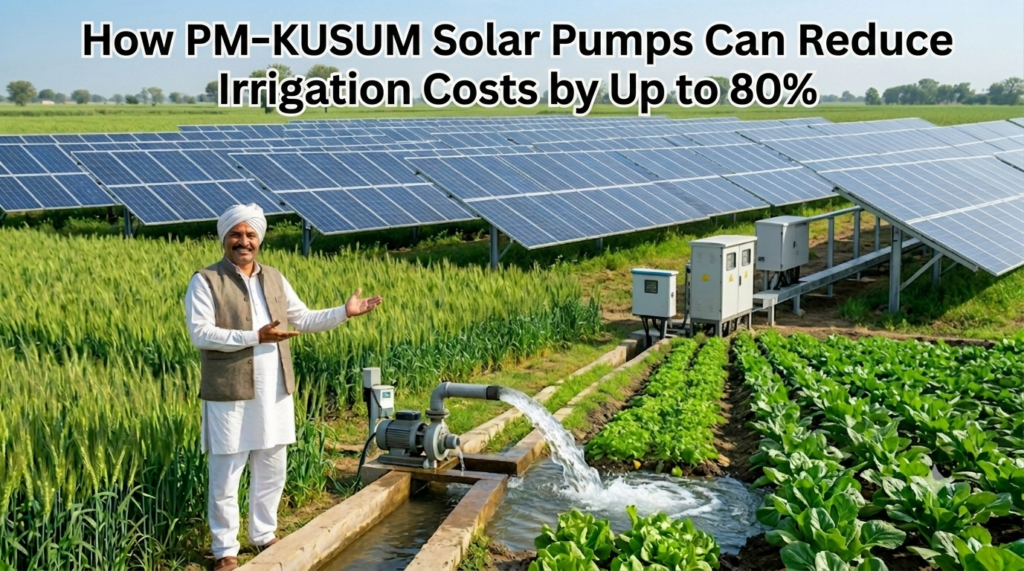
By adopting PM-KUSUM solar pumps, farmers can reduce irrigation costs by up to 80%, improve productivity, gain energy independence, and contribute to a cleaner environment.
What is the PM-KUSUM Scheme?
PM-KUSUM is a flagship renewable energy initiative introduced by the Government of India to encourage the use of solar energy in agriculture.
Key Objectives
-
- Reduce dependence on diesel-powered irrigation pumps
-
- Provide reliable energy access to farmers
-
- Lower agricultural operating expenses
-
- Promote renewable energy adoption in rural areas
-
- Improve farmer income and profitability
-
- Strengthen India’s clean energy infrastructure
The scheme supports the installation of solar-powered pumps and solarization of existing agricultural pumps.
Why Irrigation Costs Are a Major Concern for Farmers
Traditional irrigation systems rely heavily on diesel generators or grid electricity, both of which come with significant challenges.
Common Problems Faced by Farmers
-
- Rising diesel prices increase operational costs
-
- High electricity bills reduce profit margins
-
- Frequent power cuts interrupt irrigation schedules
-
- Voltage fluctuations damage pump motors
-
- Expensive maintenance and repairs
-
- Delayed irrigation impacts crop health and yield
These challenges not only increase costs but also affect agricultural productivity and long-term farm sustainability.
What Are PM-KUSUM Solar Pumps?
PM-KUSUM solar pumps are irrigation systems powered by solar photovoltaic (PV) panels. These panels convert sunlight into electricity, which is then used to operate water pumps for irrigation.
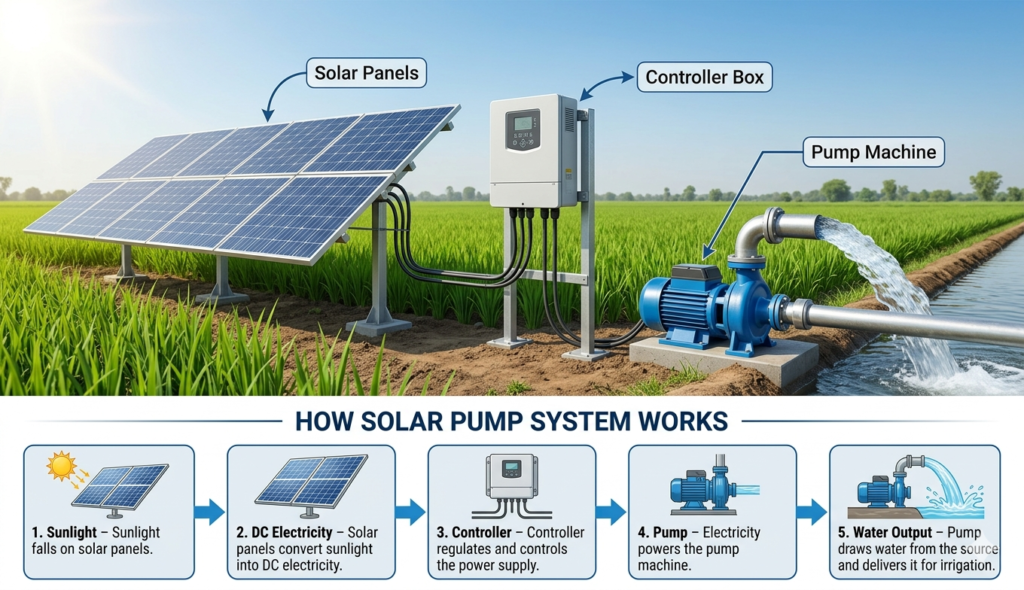
Main Components
-
- Solar PV Modules
-
- Solar Pump Controller
-
- AC/DC Water Pump
-
- Mounting Structure
-
- Safety and Protection Equipment
How Solar Pumps Work
-
- Solar panels absorb sunlight.
-
- Electricity is generated from solar energy.
-
- The controller regulates power flow.
-
- The pump lifts water from the source.
-
- Water is supplied directly to agricultural fields.
The entire process operates without diesel fuel and requires minimal dependence on the electricity grid.
How PM-KUSUM Solar Pumps Reduce Irrigation Costs by Up to 80%
1. Elimination of Diesel Costs
Diesel-powered pumps require continuous fuel purchases throughout the year. Since solar pumps run on free sunlight, fuel expenses are completely eliminated.
Benefit
-
- Significant annual savings on diesel costs
-
- Protection against rising fuel prices
2. Reduced Electricity Expenses
Grid-connected pumps often result in monthly electricity bills and unpredictable tariff increases.
Solar pumps drastically reduce or completely eliminate these recurring expenses.
Benefit
-
- Lower utility bills
-
- Stable operating costs
3. Low Maintenance Requirements
Unlike diesel engines, solar pumps have fewer moving parts.
Benefit
-
- Lower maintenance costs
-
- Reduced repair expenses
-
- Less downtime
4. Reliable Daytime Irrigation
Solar pumps operate during daylight hours when irrigation is most needed.
Benefit
-
- Timely watering of crops
-
- Better crop growth
-
- Improved productivity
5. Long Operational Life
Solar panels typically last between 20–25 years with proper maintenance.
Benefit
-
- Long-term return on investment
-
- Decades of free energy generation
Government Subsidy Under PM-KUSUM
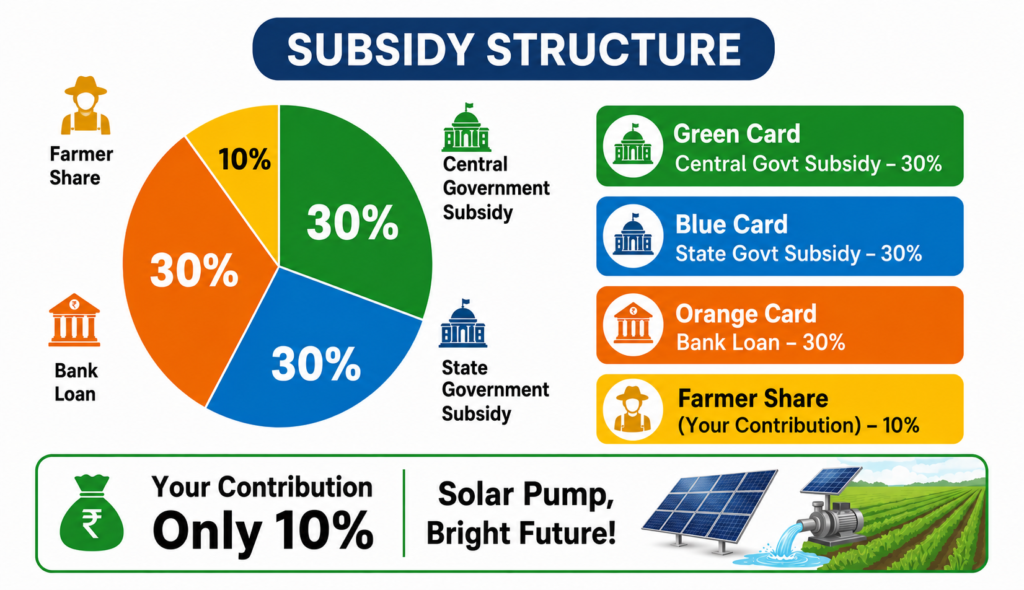
One of the biggest advantages of the PM-KUSUM Scheme is the substantial financial assistance provided by the Government of India. The subsidy structure is designed to make solar irrigation systems affordable for farmers, including small and marginal landholders.
Subsidy Structure
-
- 30% Subsidy from the Central Government
-
- 30% Subsidy from the State Government
-
- Up to 30% Bank Loan Facility
-
- Farmer Contribution: Approximately 10%
This means farmers can install solar pumps with a very low upfront investment while enjoying long-term savings on fuel and electricity costs.
Why the Subsidy Matters
-
- Reduces the initial installation cost
-
- Makes solar pumps affordable for small farmers
-
- Accelerates return on investment
-
- Encourages renewable energy adoption
-
- Reduces dependency on conventional energy sources
Farmers should check with their respective State Nodal Agencies for the latest subsidy details, as subsidy percentages and implementation guidelines may vary by state.
Eligibility Criteria for PM-KUSUM Scheme
To benefit from the PM-KUSUM Scheme, applicants must meet certain eligibility requirements. While specific guidelines may vary from state to state, the following categories are generally eligible.
Who Can Apply?
 Individual Farmers
Small and Marginal Farmers
Medium Landholders
Farmer Producer Organizations (FPOs)
Cooperative Societies
Water User Associations
Panchayats
Community Irrigation Projects
Basic Requirements
-
- Applicant must be an Indian citizen.
-
- The farmer should possess valid agricultural land records.
-
- Aadhaar Card is required.
-
- Active bank account details are required.
-
- Mobile number linked with Aadhaar is preferred.
-
- Applicants must comply with the guidelines issued by their State Renewable Energy Department.
Grid-Connected Solar Pumps: An Additional Income Opportunity
Under PM-KUSUM Component-C, farmers can solarize existing grid-connected pumps.
Additional Benefits
-
- Meet irrigation needs using solar energy
-
- Export excess electricity to the grid
-
- Earn additional income by selling surplus power to DISCOMs
This transforms solar systems from an expense-saving tool into a revenue-generating asset.
Cost Comparison: Diesel Pump vs PM-KUSUM Solar Pump
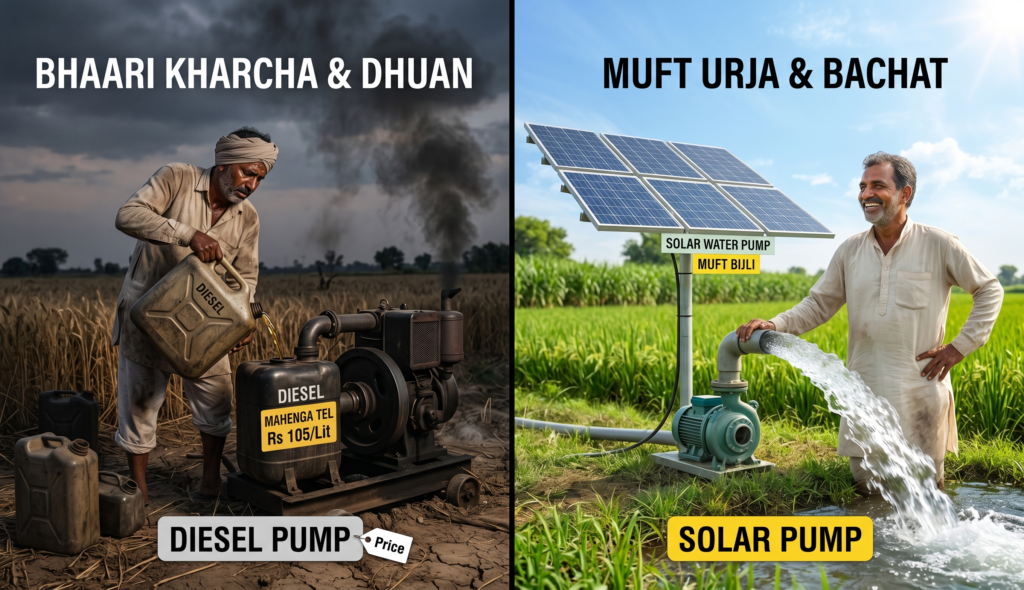
| Factor | Diesel Pump | PM-KUSUM Solar Pump |
| Fuel Cost | High | Zero |
| Electricity Cost | Moderate to High | Minimal |
| Maintenance | High | Low |
| Environmental Impact | High Emissions | Clean Energy |
| Long-Term Savings | Limited | Significant |
| Power Reliability | Fuel Dependent | Sunlight Dependent |
Key Benefits of PM-KUSUM Solar Pumps
Financial Benefits
-
- Up to 80% reduction in irrigation costs
-
- Lower operating expenses
-
- Faster return on investment
-
- Protection from fuel price fluctuations
Agricultural Benefits
-
- Timely irrigation
-
- Improved crop yields
-
- Better water management
-
- Increased farming efficiency
Environmental Benefits
-
- Reduced carbon emissions
-
- Lower air pollution
-
- Sustainable farming practices
-
- Support for India’s renewable energy goals
Real-World Example
Consider a farmer using a 5 HP diesel irrigation pump.
Before Solar Pump Installation
-
- Annual Diesel Expense: ₹50,000–₹70,000
-
- Maintenance Cost: ₹5,000–₹10,000
-
- Total Annual Cost: ₹55,000–₹80,000
After PM-KUSUM Solar Pump Installation
-
- Fuel Cost: ₹0
-
- Maintenance Cost: Minimal
-
- Annual Irrigation Cost: ₹30,000–₹40,000
Estimated Savings
A farmer can save approximately ₹60,000–₹75,000 every year, depending on usage patterns and local conditions.
How to Apply for PM-KUSUM Solar Pumps
Step 1: Check Eligibility
Verify eligibility through your state’s renewable energy department or nodal agency.
Step 2: Submit Application
Complete the online or offline application process.
Step 3: Document Verification
Submit required documents for verification.
Step 4: Approval and Installation
Upon approval, authorized vendors install the solar pump system.
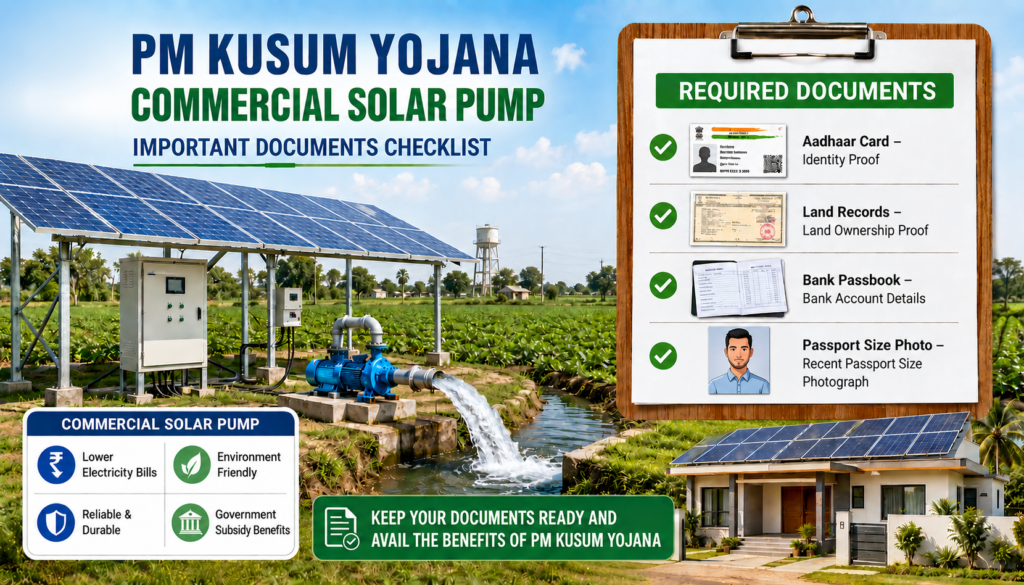
Required Documents
-
- Aadhaar Card
-
- Land Ownership Records
-
- Passport-Size Photograph
-
- Bank Account Details
-
- Mobile Number
-
- Identity Proof
Conclusion
PM-KUSUM solar pumps are transforming Indian agriculture by providing farmers with a reliable, cost-effective, and sustainable irrigation solution.
By eliminating diesel expenses, reducing electricity costs, minimizing maintenance requirements, and ensuring reliable daytime irrigation, these systems can reduce irrigation costs by up to 80%.
Combined with government subsidies, long-term savings, and the potential to earn additional income through surplus power generation, PM-KUSUM solar pumps offer one of the most practical and rewarding investments available for Indian farmers.
Frequently Asked Questions (FAQs)
What is the PM-KUSUM Scheme?
PM-KUSUM is a Government of India initiative that promotes solar energy adoption in agriculture through solar pump installations and renewable energy projects.
How much subsidy is available under PM-KUSUM?
Farmers can receive up to 60% subsidy, with 30% from the Central Government and 30% from the State Government. Additional bank financing may also be available.
How much can farmers save using solar pumps?
Farmers can reduce irrigation costs by up to 80%, depending on their previous fuel and electricity expenses.
Who is eligible for PM-KUSUM?
Individual farmers, FPOs, cooperative societies, water user associations, and community irrigation projects are generally eligible.
Do solar pumps work during cloudy weather?
Yes, although efficiency may be lower depending on sunlight availability.
How long do solar panels last?
Most solar panels have a lifespan of 20–25 years with proper maintenance.
Can solar pumps completely replace diesel pumps?
In most agricultural applications, solar pumps can effectively replace diesel pumps and eliminate fuel dependency.