India Rooftop Solar 2026 Update: What Homeowners and Solar Installers Need to Know About Smarter Solar Systems.
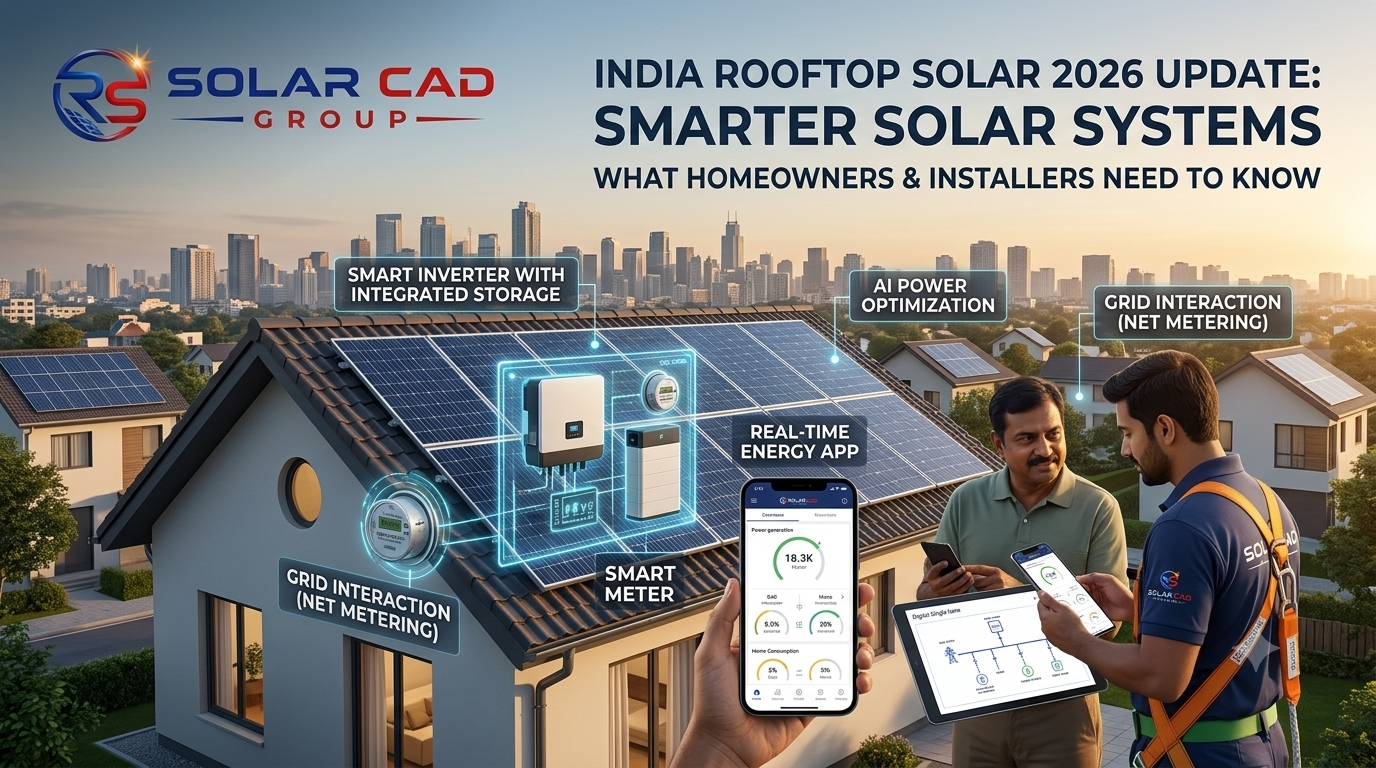
India’s rooftop solar market is moving into a new phase in 2026.
Solar panels are no longer being viewed simply as a way to reduce electricity bills. Homeowners are increasingly looking at complete energy systems that combine high-efficiency solar modules, smart inverters, better monitoring, reliable electrical design, battery storage, and grid connectivity.
At the same time, solar installers are dealing with a growing number of projects, changing technical requirements, subsidy-linked installations, DISCOM processes, equipment choices, and customer expectations.
The result is a shift from simply installing more solar panels to designing smarter and more reliable rooftop solar systems.
This 2026 update explains what homeowners and solar installers should understand before planning, designing, or installing a rooftop solar system in India.
India’s Rooftop Solar Market Is Expanding Rapidly
India’s residential rooftop solar sector has grown significantly since the launch of the PM Surya Ghar: Muft Bijli Yojana.
The scheme was launched in February 2024 with the objective of supporting rooftop solar adoption among one crore households. By August 2026, more than 51 lakh households were benefiting from rooftop solar installations under the programme.
The rapid adoption shows that rooftop solar is becoming an important part of India’s residential electricity landscape.
But market growth also means that homeowners need to make more informed decisions about system design, equipment, installation quality, documentation, and long-term maintenance.
For installers, the growing market creates an opportunity but also increases the importance of accurate engineering and efficient project execution.
What Is Changing in Rooftop Solar in 2026?
The biggest change is that rooftop solar is becoming more technology-driven.
A modern rooftop system can include:
- High-efficiency solar PV modules
- Smart or advanced inverters
- Remote monitoring
- Digital generation data
- Net-metering or grid-interconnection systems
- Battery energy storage
- Energy management systems
- Improved protection and electrical safety
- More detailed engineering and documentation
Instead of asking only, “How many solar panels do I need?”, homeowners should now ask:
“What type of complete solar energy system is suitable for my electricity usage, roof, budget, and future requirements?”
1. PM Surya Ghar Continues to Drive Residential Solar Adoption
Government support remains one of the major factors behind India’s residential rooftop solar expansion.
Under PM Surya Ghar, eligible residential consumers can receive Central Financial Assistance according to the applicable scheme guidelines and system capacity.
However, subsidy eligibility is only one part of the project.
A homeowner should also consider:
- Monthly electricity consumption
- Available rooftop area
- Roof orientation and shading
- Structural condition of the roof
- Local DISCOM requirements
- Net-metering requirements
- Inverter selection
- Future electricity demand
- Battery requirements
- Installation and maintenance quality
A low-cost system is not automatically the right system.
The objective should be to design a system that works efficiently and safely over its expected operating life.
2. Smart Inverters Are Becoming More Important
The inverter is one of the most important components of a rooftop solar system.
Solar modules generate DC electricity, while most household appliances use AC electricity. The inverter performs this conversion and also manages important aspects of system operation.
Modern inverters can provide features such as:
- Real-time generation monitoring
- Fault detection
- Remote performance monitoring
- Grid protection
- System diagnostics
- Communication with monitoring platforms
- Compatibility with batteries and energy-management systems
In 2026, inverter-level generation data and data-storage requirements are also receiving increased regulatory attention.
This means installers need to pay greater attention not only to inverter capacity but also to communication, monitoring, configuration, documentation, and compliance requirements.
For homeowners, this means the inverter should not be selected only on price.
3. Battery Storage Is Becoming a Bigger Part of the Conversation
Traditional rooftop solar systems generally generate electricity during daylight hours.
But household electricity demand does not always match solar generation.
For example, a home may produce significant solar power during the afternoon while consuming more electricity in the evening.
Battery storage can help shift some of that generated energy to a later time.
A solar-plus-storage system can potentially help with:
- Evening electricity consumption
- Backup power requirements
- Better utilisation of solar generation
- Managing selected household loads
- Improving energy independence
However, batteries are not automatically necessary for every home.
The decision should depend on electricity consumption patterns, backup requirements, local grid conditions, battery cost, available space, and the homeowner’s objectives.
Installers should therefore treat battery sizing as an engineering decision rather than simply adding a battery to every project.
4. Solar Design Quality Matters More as Installations Scale
As rooftop solar adoption increases, proper design becomes even more important.
A good rooftop solar design should consider:
Roof Layout
The available roof area should be evaluated for usable installation space, access pathways, equipment locations, and potential obstructions.
Shading
Water tanks, parapet walls, nearby buildings, trees, and other structures can affect solar generation.
Module Layout
The number and arrangement of modules should be planned according to roof dimensions, orientation, tilt, equipment specifications, and electrical design requirements.
String Design
Correct string configuration is important for matching the PV array with the inverter’s operating range.
Electrical Design
The design should account for:
- DC and AC cable sizing
- Voltage and current
- Protection devices
- Disconnects
- Earthing
- Surge protection
- Inverter specifications
- Interconnection requirements
Structural Considerations
The mounting system and roof structure should be evaluated appropriately, particularly for larger or more complex installations.
A professional design helps reduce installation problems and supports smoother project execution.
5. Compliance and Documentation Are Becoming More Important
A rooftop solar project is not just about installing panels on a roof.
Depending on the project and local requirements, installers may need to deal with:
- Electrical drawings
- Single-line diagrams
- Equipment specifications
- Structural information
- Net-metering documentation
- DISCOM requirements
- Applicable standards
- Inspection requirements
- Commissioning information
For installers handling a large number of projects, standardised documentation can save time and reduce avoidable errors.
This is especially important when installers are managing projects across different locations with different utility or local requirements.
6. Homeowners Should Look Beyond Panel Wattage
One of the most common questions homeowners ask is:
“Which wattage solar panel should I install?”
Panel wattage is important, but it is not the only factor.
Homeowners should evaluate the complete system.
Before selecting a solar installer, ask:
How much electricity do I use?
Look at your recent electricity bills instead of estimating consumption from memory.
How much roof space is available?
A professional site assessment should identify usable roof area and potential shading.
What inverter will be used?
Ask about inverter capacity, monitoring, warranty, protection features, and compatibility.
Will I need battery storage?
Consider your evening consumption and backup requirements.
What approvals are required?
Ask the installer about the applicable DISCOM and net-metering process.
What documentation will I receive?
Keep system specifications, warranties, drawings, invoices, and commissioning documents safely.
7. Solar Installers Need Better Project Workflows
The rapid growth of rooftop solar means installers need to handle more projects without compromising design quality.
A strong workflow can include:
Lead → Site Information → Proposal → Solar Design → Engineering → Approval → Installation → Inspection → Commissioning → Monitoring
Delays at any stage can affect the complete project.
For example, inaccurate roof measurements can affect the design.
An incorrect equipment selection can create installation complications.
Incomplete documentation can delay approvals.
Poor communication between the designer, installer, customer, and utility can create unnecessary rework.
This is why professional solar design and project coordination are becoming increasingly important.
8. Proposal Design Is Also Becoming More Important
Customers increasingly want to understand what they are paying for.
A professional solar proposal should clearly communicate:
- System size
- Estimated energy generation
- Module specifications
- Inverter specifications
- Battery information, if applicable
- Installation scope
- Estimated savings
- Warranty information
- Project cost
- Applicable subsidy or financial support
- Expected project timeline
A clear proposal helps the customer understand the project before installation begins.
For installers, it can also make the sales process more structured.
9. Battery-Ready Solar Systems Can Help With Future Expansion
Not every homeowner will install batteries immediately.
However, some homeowners may want storage later.
When planning a system, it can therefore be useful to consider whether the selected inverter and system architecture can support future battery integration.
A future-ready approach can help avoid unnecessary replacement of major equipment later.
However, compatibility should always be confirmed from the manufacturer’s technical specifications rather than assumed.
10. Equipment Selection Is Becoming More Important
The performance of a rooftop solar system depends on the complete system—not just the solar modules.
Important components include:
- Solar modules
- Inverter
- Mounting structure
- DC cables
- AC cables
- DC/AC protection
- Earthing system
- Surge protection
- Monitoring equipment
- Battery storage, where applicable
Homeowners should ask installers about the specifications, warranty, service support, and compatibility of major components.
Installers should also maintain accurate equipment records for future maintenance and troubleshooting.
11. What Solar Installers Should Prepare for in 2026
For installers, the rooftop solar market is becoming more competitive and more technically demanding.
A successful project workflow increasingly requires:
Better Solar Design
Accurate PV layouts, stringing, electrical design, and documentation can reduce rework.
Faster Proposals
Customers want clear information before making purchasing decisions.
Better Project Tracking
Installers managing multiple projects need visibility into design, approval, installation, inspection, and commissioning status.
Stronger Customer Communication
Customers should know what happens at every stage of the project.
Equipment Knowledge
Installers should understand inverter, battery, module, protection, and monitoring technologies.
Compliance Awareness
Technical and regulatory requirements should be checked before project execution.
The Bigger Shift: From Solar Installation to Energy Management
The rooftop solar industry is gradually moving beyond the simple concept of installing photovoltaic panels.
The future system can combine:
Solar + Smart Inverter + Battery + Monitoring + Energy Management + Grid
This creates a more connected energy system.
For homeowners, the benefit is better visibility into how their electricity is produced and consumed.
For installers, it means the technical scope of a solar project can become broader and requires stronger design, engineering, installation, and monitoring capabilities.
What Should Homeowners Do Before Installing Solar in 2026?
Before signing an installation contract, homeowners should create a simple checklist.
Homeowner Solar Checklist
Review recent electricity bills
Check available rooftop space
Identify shading and roof obstructions
Ask for a detailed solar proposal
Compare module and inverter specifications
Understand subsidy eligibility
Ask about DISCOM/net-metering requirements
Check installation and equipment warranties
Discuss battery requirements if backup is important
Ask for system drawings and technical documentation
Understand maintenance and after-sales support
Confirm what is included in the installation price
This approach can help homeowners make a decision based on the complete system rather than only the initial price.
What This Means for India’s Rooftop Solar Future
India’s rooftop solar market is entering a stage where quality, technology, monitoring, storage, and system design are becoming just as important as installation volume.
Government programmes are supporting adoption, while advances in inverters, batteries, monitoring systems, and solar design are changing what a modern rooftop system can offer.
For homeowners, the key is to choose a system based on actual electricity requirements and long-term performance.
For installers, the opportunity is to build efficient workflows that combine accurate design, quality equipment, professional installation, documentation, and customer support.
The next phase of India’s rooftop solar growth will not simply be about putting more panels on more roofs.
It will be about building smarter, safer, better-designed, and more connected solar energy systems.
How RS Solar CAD Group Can Support Solar Projects
At RS Solar CAD Group, professional solar design and engineering support can help solar installers, EPC companies, and contractors manage the technical side of their projects.
Our support can include:
- Residential solar PV design
- Commercial solar design
- PV layout and stringing
- Single-line diagrams
- Permit-ready plan sets
- Electrical design
- Structural design support
- Battery energy storage system design
- EV charging design
- Proposal support
- As-built documentation
Accurate design and organised documentation can help installers move from project planning to installation with greater clarity.
Need professional solar design support for your next project?
Contact RS Solar CAD Group at sales@rscadgroup.com or visit www.rssolarcadgroup.com.
(Frequently Asked Questions)
Is rooftop solar still a good option for Indian homes in 2026?
Rooftop solar can help eligible homeowners reduce grid electricity consumption and generate electricity on-site. The financial and technical benefits depend on electricity usage, system size, roof conditions, local tariffs, applicable subsidy rules, and installation quality.
What is PM Surya Ghar?
PM Surya Ghar: Muft Bijli Yojana is a central government programme launched to support residential rooftop solar adoption in India.
Do all rooftop solar systems need batteries?
No. Battery storage depends on the homeowner’s backup requirements, electricity consumption pattern, system configuration, and budget.
What is a smart solar inverter?
A smart inverter can provide functions such as system monitoring, communication, diagnostics, grid management, and compatibility with advanced energy-management or storage systems, depending on the model.
Why is professional solar design important?
Professional design helps determine appropriate module placement, string configuration, inverter selection, electrical protection, and project documentation before installation.
Should homeowners focus only on the lowest installation price?
The total value of a solar system depends on equipment quality, engineering, installation, warranties, documentation, monitoring, maintenance, and long-term performance not only the initial price.
Final Takeaway
India’s rooftop solar market in 2026 is becoming smarter and more technology-driven.
For homeowners, the focus should be on selecting a properly designed system that matches their electricity needs.
For installers, the focus should be on accurate engineering, efficient project workflows, quality equipment, compliance, and reliable execution.
As solar, storage, smart inverters, and digital monitoring come together, rooftop solar is evolving from a simple electricity-generation system into a more complete home energy management solution.