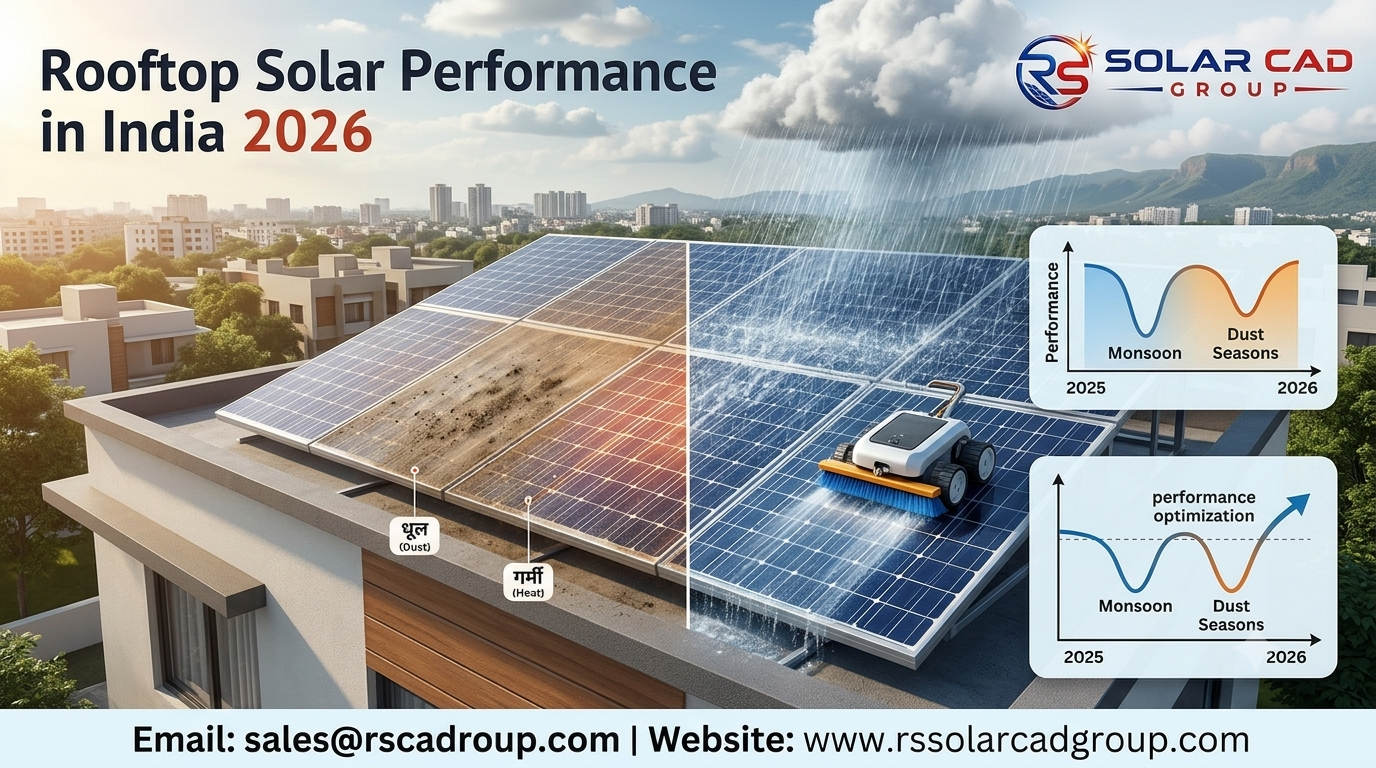
Rooftop Solar Performance in India 2026: How Heat, Dust and Monsoon Affect Power Generation
Introduction
India’s rooftop solar market continues to grow as homeowners look for ways to generate electricity from renewable energy. However, installing solar panels is only one part of achieving reliable long-term performance. Local weather conditions, roof design, dust accumulation and regular maintenance can all influence how much electricity a solar system generates.
India experiences diverse climatic conditions, from extremely hot summers and dusty environments to heavy monsoon rainfall and humid coastal weather. These conditions affect rooftop solar systems in different ways. High temperatures can reduce panel output, accumulated dust can block sunlight, and prolonged cloudy weather can temporarily reduce electricity generation.
For homeowners, understanding these factors is essential to getting the most from a rooftop solar installation.
In this guide, RS Solar CAD Group explores how heat, dust and monsoon weather affect rooftop solar performance in India, along with practical steps homeowners can take to maintain their systems throughout the year.
1. How Does Extreme Heat Affect Solar Panel Performance?
Many homeowners assume that hotter weather automatically means higher solar electricity production. In reality, solar panels need sunlight to generate electricity, but excessive cell temperatures can reduce their operating efficiency.
Photovoltaic panels convert sunlight into electrical energy. As their operating temperature increases, the voltage they produce generally decreases, which can reduce total power output.
This is particularly relevant in Indian cities where summer temperatures can become extremely high and rooftop surfaces absorb substantial heat.
Why do solar panels lose efficiency in hot weather?
Several factors contribute to temperature-related performance losses:
- Higher cell temperatures: Solar cells generally produce less voltage as their operating temperature rises above the conditions used for their rated performance.
- Heat trapped near the roof: Poor airflow beneath panels can limit natural cooling.
- Hot rooftop surfaces: Concrete and metal roofs can absorb and radiate heat toward nearby equipment.
- Inverter temperature: Excessive ambient temperatures can also affect inverter operation and may trigger thermal protection in some conditions.
A 2025 study published in Scientific Reports, based on a pilot rooftop PV system in Lucknow, India, observed an average daily efficiency reduction of 12% under the study’s elevated-temperature conditions. These results illustrate the potential impact of heat but should not be treated as a universal loss percentage for every rooftop system.
How can homeowners improve solar performance in summer?
Homeowners can take several practical steps:
- Ensure the installation provides appropriate airflow beneath the solar modules.
- Keep ventilation areas around inverters clear and follow the manufacturer’s installation requirements.
- Monitor daily electricity generation during periods of strong sunlight.
- Check for unusual drops in output that may indicate overheating, shading or equipment problems.
- Ask a qualified solar professional to inspect the system if performance declines unexpectedly.
Key takeaway: Solar system design should account for local temperatures, roof conditions and ventilation rather than relying solely on a panel’s rated power.
2. How Does Dust Accumulation Reduce Solar Power Generation?
Dust is a common challenge for rooftop solar installations across India. Construction activity, road traffic, agricultural operations, pollution and dry weather can cause particles to accumulate on panel surfaces.
This accumulation is known as soiling. When dust and other deposits cover the glass surface, less sunlight reaches the solar cells, potentially reducing electricity generation.
Why is dust a major concern in Indian cities?
The impact depends on local conditions. Solar installations in dry, dusty environments may accumulate deposits more quickly than systems in areas with frequent effective rainfall.
For example, homeowners in Delhi-NCR, Rajasthan and other dust-prone regions may need to pay particular attention to panel cleanliness during dry periods.
Research published in Scientific Reports in April 2026 examined the effect of different cleaning frequencies on solar modules in Roorkee, India. The study found that dust-related losses varied with cleaning intervals and environmental conditions, reinforcing the importance of locally appropriate maintenance.
Signs that dust may be affecting your system
Look for the following indicators:
- Visible dust, bird droppings or deposits on the panel surface.
- Lower electricity generation compared with similar sunny days.
- Uneven deposits across different panels.
- A persistent performance decline that cannot be explained by weather or shading.
A fall in generation does not necessarily mean that the panels need cleaning. Temperature, cloud cover, inverter faults, shading and grid interruptions can also affect output. Comparing performance under similar weather conditions helps make the assessment more meaningful.
How often should solar panels be cleaned in India?
There is no single cleaning schedule that works for every location. The ideal frequency depends on dust levels, rainfall, panel tilt, nearby trees, local pollution and the cost of cleaning.
Homeowners should:
- Inspect panel surfaces periodically from a safe location.
- Follow the cleaning and maintenance instructions provided by the panel manufacturer or installer.
- Use suitable cleaning methods that will not scratch the glass or damage electrical components.
- Avoid abrasive materials and harsh chemicals.
- Hire a qualified service provider when roof access is difficult or unsafe.
Never climb onto a roof or touch electrical equipment to clean panels unless you have the appropriate training and safety arrangements.
Key takeaway: Regular inspection and a location-specific cleaning plan can help prevent avoidable power-generation losses.
3. How Does Monsoon Weather Affect Rooftop Solar Systems?
The monsoon season brings an important mix of benefits and challenges for rooftop solar installations.
Rain can wash away some accumulated dust, improving the amount of sunlight reaching the panel surface. At the same time, clouds, heavy rainfall and shorter periods of direct sunlight can reduce electricity production.
As a result, a clean panel during the monsoon does not necessarily generate more electricity than a dustier panel on a clear summer day.
Benefits of monsoon rainfall
Rainfall can help remove loose dust and some surface deposits. Cooler ambient conditions may also reduce solar cell temperatures.
However, rain is not a substitute for all maintenance. Sticky deposits, bird droppings, oily residues and some forms of dirt may remain after rainfall.
Challenges during the rainy season
Several factors can affect rooftop solar generation and reliability:
- Cloud cover: Less sunlight reaches the panels, reducing instantaneous power output.
- Heavy rainfall: Electricity production may fall temporarily during intense showers.
- Water accumulation: Poor roof drainage can create problems around mounting structures and electrical installations.
- Moisture exposure: Damaged cables, connectors or enclosures may become safety concerns.
- Strong winds: Loose mounting components or debris can damage the system during severe weather.
How can homeowners prepare their systems for the monsoon?
Before the rainy season, homeowners should arrange an appropriate inspection of mounting structures, cable routing, connectors, inverter enclosures and roof drainage.
They should also check whether nearby branches, loose objects or debris could damage the installation during strong winds.
If the system shows repeated inverter errors, damaged components or unexplained shutdowns after rainfall, contact a qualified solar technician rather than attempting electrical repairs independently.
Key takeaway: Monsoon rainfall may help clean panels, but proper drainage, secure mounting and sound electrical protection remain essential.
4. Seasonal Solar Performance in India: Summer vs Monsoon vs Winter
Solar generation changes throughout the year because sunlight availability, operating temperatures and weather patterns change with the seasons.
|
Season |
Main performance factor |
What homeowners should expect |
|
Summer |
Strong sunlight and high panel temperatures |
Good solar resource, but heat can reduce operating efficiency |
|
Monsoon |
Cloud cover, rainfall and humidity |
Variable generation, with rain sometimes helping remove dust |
|
Winter |
Lower temperatures and changing daylight hours |
Cooler panels may operate efficiently, but shorter days or fog can reduce total generation |
These are general patterns, not guarantees. Actual output depends on location, system orientation, shading, equipment and local weather.
For example, a clear winter day may deliver better panel operating efficiency than an extremely hot day, but the winter system may still generate less total electricity if daylight hours are shorter or fog reduces sunlight.
Homeowners should compare monthly generation with previous periods and account for weather conditions before concluding that their system is underperforming.
5. The Importance of Solar System Design for Indian Weather
Solar performance is influenced by more than panel technology. The way a rooftop system is designed and installed can affect its ability to withstand environmental conditions and generate electricity consistently.
A suitable design considers the roof’s structural characteristics, available space, orientation, tilt, shading, ventilation and the placement of electrical equipment.
Key design considerations
Roof orientation and tilt: Panel positioning should be selected to suit the location, roof constraints and expected energy-generation objectives.
Ventilation: Appropriate clearance beneath panels can support airflow and help manage operating temperatures.
Shading analysis: Trees, neighbouring buildings, water tanks and rooftop structures can reduce production if their shadows fall across the array.
Mounting structures: Structures and fasteners must be selected and installed to suit the roof and relevant wind-load requirements.
Cable and inverter placement: Electrical components should be installed according to manufacturer instructions and applicable safety requirements, with suitable protection against environmental exposure.
Drainage and roof waterproofing: The installation should avoid obstructing drainage and should preserve the integrity of the roof.
For residential solar projects, careful planning helps reduce avoidable design and installation problems. RS Solar CAD Group can be included as a resource for readers exploring solar design and engineering considerations, with the company’s specific services described in line with its verified capabilities.
6. How Can Homeowners Monitor Solar Performance?
Monitoring is one of the most useful ways to understand how a rooftop solar system behaves across changing weather conditions.
Many modern inverters and monitoring platforms provide daily, monthly and historical generation data. Homeowners can use this information to identify patterns and investigate unusual changes.
Practical solar monitoring tips
- Check daily and monthly electricity-generation figures.
- Compare output across days with similar sunlight conditions.
- Review inverter alerts and fault messages.
- Record significant changes after cleaning or maintenance.
- Check whether shading has increased because of growing trees or new rooftop objects.
- Contact the installer if the system repeatedly shuts down or produces substantially less electricity than expected.
Where available, comparing actual generation with a suitable expected-generation estimate can provide more insight than looking at daily output alone.
A brief decline during cloudy weather is normal. A persistent decline under comparable conditions deserves further investigation.
7. Common Solar Maintenance Mistakes to Avoid
Even a well-designed solar system can experience preventable performance or safety problems if it is not maintained properly.
Avoid these common mistakes:
- Assuming rain cleans every panel completely. Rain may remove loose dust but cannot reliably remove every type of deposit.
- Cleaning panels during peak heat. Follow manufacturer guidance and avoid cleaning hot panels with cold water, which can cause thermal stress.
- Using abrasive brushes or harsh chemicals. These can damage panel surfaces or coatings.
- Ignoring inverter warnings. Repeated faults may indicate an electrical or equipment issue that needs professional attention.
- Overlooking mounting structures. Loose hardware, corrosion or damage should be assessed by a qualified professional.
- Ignoring roof drainage before the monsoon. Blocked drains and accumulated debris can increase the risk of water-related problems.
- Assuming every generation drop means a dirty panel. Weather, shading, grid conditions and equipment faults must also be considered.
A planned maintenance routine helps homeowners address problems early while protecting the safety and longevity of the installation.
8. How RS Solar CAD Group Fits into the Solar Journey
Selecting solar equipment is important, but a residential solar project also requires appropriate planning, design and installation considerations.
RS Solar CAD Group works in the solar industry, and its relevant design and engineering capabilities can be introduced to readers who want to understand how roof conditions, system layout and technical planning influence a rooftop solar project.
For homeowners researching solar solutions, it is useful to ask providers about:
- Roof layout and shading assessment.
- Panel placement and mounting arrangements.
- Equipment compatibility and installation requirements.
- Electrical safety and applicable local standards.
- Performance monitoring and maintenance support.
The specific services available should be confirmed directly with RS Solar CAD Group before making project commitments. A well-planned installation, combined with suitable maintenance and monitoring, can help homeowners manage the effects of India’s changing weather.
Conclusion
Heat, dust and monsoon weather all influence rooftop solar performance in India, but they affect systems in different ways. High panel temperatures can reduce operating efficiency, accumulated dust can block sunlight, and monsoon cloud cover can temporarily lower electricity generation even when rainfall improves panel cleanliness.
Homeowners can respond by monitoring output, following a suitable cleaning schedule, preparing installations for severe weather and arranging professional inspections when problems arise.
Just as importantly, appropriate system design and installation help address roof conditions, ventilation, shading, mounting and electrical protection from the beginning.
For RS Solar CAD Group, this topic offers an opportunity to educate homeowners about practical solar performance considerations while highlighting the importance of sound solar design and engineering.
A solar installation is a long-term investment in energy generation. Understanding local weather conditions and maintaining the system appropriately can help homeowners make informed decisions throughout its operating life.
Frequently Asked Questions
1. Does hot weather reduce solar panel efficiency?
Yes. Solar cells generally experience lower voltage and reduced power output as operating temperatures rise. Actual losses depend on the panel’s temperature characteristics, installation and environmental conditions.
2. Does rain clean solar panels automatically?
Rain can remove loose dust, but it may not remove bird droppings, oily deposits or stubborn dirt. Periodic inspection is still important.
3. How often should solar panels be cleaned in India?
Cleaning frequency depends on local dust, rainfall, pollution, panel tilt and nearby sources of contamination. Homeowners should inspect panels periodically and follow manufacturer guidance rather than relying on one universal schedule.
4. Do solar panels generate electricity during the monsoon?
Yes. Solar panels can generate electricity during cloudy and rainy conditions, although output is usually lower when less sunlight reaches the modules.
5. Can solar panels overheat in Indian summers?
Solar panels can reach high operating temperatures in strong sunlight. Proper installation, suitable airflow and equipment installed according to manufacturer requirements help manage heat.
6. How can I tell if my rooftop solar system is underperforming?
Compare generation under similar weather conditions, review monitoring data and check for inverter alerts or new shading. If the decline persists, arrange an inspection by a qualified solar professional.
7. Why is solar system design important for Indian weather?
Design affects panel positioning, ventilation, shading, mounting stability, cable routing and drainage. Considering local conditions helps address performance and safety risks.